 Skip to content
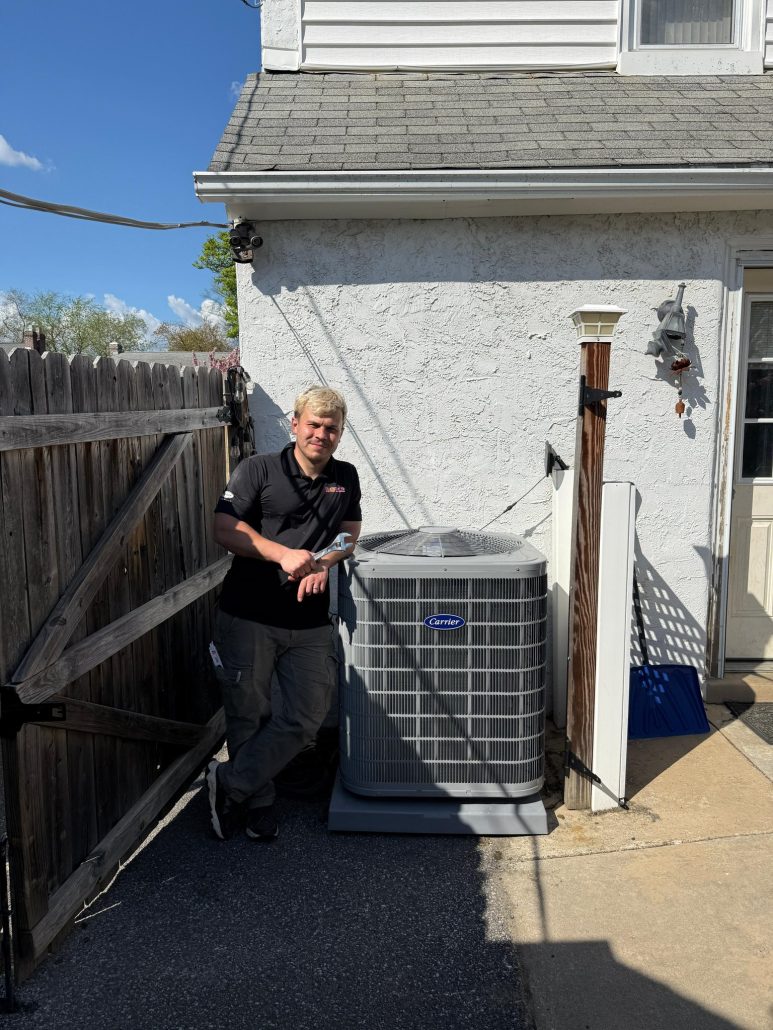
If your AC has sat dormant through a Philadelphia winter without a professional pre-season inspection, you risk compressor damage, refrigerant issues, corroded coils, and a first-day breakdown when summer heat hits. The ideal window to schedule a pre-season AC check in the Philadelphia area is late February through May. Waiting until June or July means technicians are booked out and you have no time to fix problems before you need cooling. An annual AC tune-up service typically costs $75 to $150, a fraction of what a single emergency repair or early system replacement will run you.
Your AC Just Sat Through a Philadelphia Winter. Here’s Why That Matters.
Spring has a way of sneaking up on homeowners in the Philadelphia suburbs. One week you’re running the heat, and before you know it there’s a muggy 85-degree afternoon sitting on your doorstep in May. Most people flip on their AC without a second thought and for a lot of them, that first startup after a long winter idle is when things go wrong.
Turning on the AC after a long time is not quite like turning on a light switch. Your system has been sitting through months of freeze-thaw cycles, humidity fluctuations, and temperature swings that are specific to this part of Pennsylvania. That outdoor condenser unit has been doing nothing but weathering the elements since October or November. Understanding what actually happens to it during those months and what to check before you fire it up is the difference between a smooth summer and a very expensive June phone call.
What Philadelphia Winters Actually Do to a Dormant AC Unit
This is worth taking seriously because the Philadelphia metro area is not Miami or Phoenix. We sit right at the boundary of humid subtropical and humid continental climate zones, which means our winters deliver real cold average January lows around 26°F to 30°F, combined with high ambient moisture. That combination creates conditions that are harder on outdoor HVAC equipment than either a consistently dry cold climate or a mild southern one.
Here is what is actually happening to your idle condenser unit from December through February:
- Repeated freeze-thaw cycles drive meltwater into the seams, fins, and joints of the condenser coil. When that water refreezes overnight, it expands and can physically bend fins, warp fasteners, and accelerate corrosion of the base pan. Over several winters without inspection, this accumulates into real structural damage.
- Snow load presses against the coil fins, and nor’easters, which the Philadelphia region sees regularly, can deposit enough snow and debris into the top grille of the unit to create obstructions that won’t be obvious until the system struggles to breathe in summer.
- The compressor oil inside the system thickens considerably in cold temperatures. If the breaker feeding your outdoor unit was switched off for the winter, the crankcase heater that normally keeps this oil at working temperature has not been running. Manufacturers commonly specify a waiting period of 12 to 24 hours after restoring power before attempting the first cooling run, a step almost nobody follows without professional guidance.
- Blower motors and other moving components that sit idle for months can develop stiffness, bearing wear, or in older systems, outright seizing. These issues are rarely visible to a homeowner doing a visual check.
- Pests. Mice, wasps, and other insects find AC units to be convenient winter shelters. It is genuinely common for technicians doing spring inspections in Delaware County and Chester County homes to find nests inside condenser units or chewed wiring insulation.
Compare this to a home in, say, central Florida, where the AC may run year-round or sit idle for a few mild weeks at most. The equipment never experiences true freeze-thaw stress. The refrigerant lines don’t contract and expand through the same pressure swings. The lubricant doesn’t thicken. Philadelphia homeowners are dealing with a level of seasonal stress on their HVAC systems that simply does not exist in more stable climates.
The Risk Nobody Talks About: What Happens If You Just Turn It On?
Let’s be honest, most homeowners do exactly this. They wait for the first warm day, walk to the thermostat, switch to cool, and wait. Sometimes nothing bad happens. Sometimes the system limps along at reduced efficiency all summer while quietly building toward a bigger failure. And sometimes, on that first startup, something breaks immediately and expensively.
The specific risk of what to do before turning on the AC after winter is largely about the compressor, the heart of the entire cooling system, and almost always the most expensive component to replace or repair. Compressor replacement typically runs anywhere from $1,200 to over $2,500, depending on your system. Here’s what can go wrong:
- If the crankcase heater hasn’t had time to warm the oil after a winter power shutdown, the compressor starts “dry”, without adequate lubrication. This causes accelerated wear or seizure on the first cooling cycle.
- If refrigerant has migrated into the compressor oil during the off-season (which can happen when the system is fully depowered), liquid refrigerant entering the compressor causes what technicians call “slugging,” and it can bend or crack the internal valves on the first run.
- A refrigerant leak that developed during winter, perhaps from a joint stressed by freeze-thaw movement, means the system starts the season low on charge. Running a low-charge system makes the compressor work harder, run hotter, and fail sooner.
Beyond the compressor, a dirty evaporator coil, one that went into winter already dusty and came out the other side, restricts airflow enough that the coil can freeze during the first real cooling run. Running the system with a frozen coil doesn’t just mean poor cooling; it can cause irreversible damage to the condenser unit outside.

The One Thing Homeowners Skip That Causes the Most Expensive Repairs
Ask any experienced HVAC tech in the Havertown or Main Line area what they see repeatedly in summer emergency calls, and the answer is almost always the same: dirty coils combined with an undetected refrigerant issue. These are the two things that homeowners consistently skip because they’re invisible.
You can change your air filter. You can clear debris from around the outdoor unit. What you cannot do without proper equipment is check refrigerant pressure, measure subcooling and superheat, or clean the condenser and evaporator coils safely and thoroughly. A refrigerant leak left unaddressed will eventually destroy a compressor. A coil that hasn’t been properly cleaned in two or three seasons reduces your system’s ability to transfer heat efficiently, forces everything to run longer and hotter, and knocks years off the life of the unit.
This is specifically what a professional AC tune-up service exists to address. A qualified technician checks refrigerant levels, measures system pressures, cleans coils, inspects electrical connections, verifies capacitor health (capacitors fail frequently after cold winters), and tests the full startup sequence under real load conditions. This is not something a DIY walkthrough accomplishes.
If you haven’t had your system inspected in the past year, or if it’s been even longer, reach out to Boyle Energy in Havertown before the season gets away from you. Their team serves homeowners across Delaware County, Chester County, Montgomery County, and Philadelphia, and spring scheduling fills up faster than most people expect. You can reach them at 610-347-5197 to schedule a pre-season inspection.
What to Do Before Turning On AC After Winter: A Practical Checklist
There are things you can do yourself before calling in a professional, and things that genuinely require a trained technician. Here’s how to think about it:
What a homeowner can reasonably handle:
- Remove any cover from the outdoor unit, and clear away leaves, sticks, and debris from around and on top of it. Maintain at least 18 to 24 inches of clearance on all sides.
- Replace the air filter on your air handler. If it was dirty going into fall and you haven’t touched it since, this is overdue.
- Restore power to the outdoor unit at least 24 hours before you plan to run the system for the first time. This is critical, and most people don’t know to do it.
- Check the condensate drain line for blockages. Algae and debris can accumulate over winter and cause water backups that damage your air handler or ceilings.
- Verify that your thermostat is switching correctly to cool mode and that the display is reading accurately.
What requires a professional and should not be skipped:
- Refrigerant level check and leak inspection
- Condenser and evaporator coil cleaning
- Electrical component testing, including capacitors, contactors, and wiring connections
- Blower motor and fan blade inspection
- Airflow measurement and duct integrity check
Knowing what to do before turning on the AC after winter is partly about these practical steps and partly about timing. If you complete the homeowner checklist and schedule a professional inspection before the end of April in the Philadelphia area, you are in a strong position. If you wait until the first 90-degree day in July to discover there’s a problem, you’re calling for emergency service when every HVAC company in Delaware and Chester County is already stretched thin.
The Lifespan Cost of Skipping Annual Pre-Season Checks
This is where the math gets sobering. A properly maintained central air conditioner should serve a Philadelphia home for 15 to 20 years. Systems that receive annual professional tune-ups routinely last 5 to 10 years longer than those that are ignored. Conversely, a neglected system, one that has gone without service for several years, may need replacement in as few as 10 years.
Consider the numbers. A new central AC system with installation costs anywhere from $5,000 to $12,000 or more, depending on the size of the home and whether ductwork needs attention. If skipping annual maintenance shaves even 5 years off a system’s life, you are paying for a new installation years ahead of schedule. The annual cost of a professional what to do before turning on the AC after winter inspection and tune-up is $75 to $150. The cost of replacing a system 5 years early, at a conservative mid-range figure, is roughly $7,500 to $9,000. The math is not subtle.
There’s also the warranty issue that doesn’t get enough attention. Most AC manufacturers require documented proof of annual professional maintenance as a condition of honoring warranty claims. A homeowner who skips tune-ups for three years and then experiences a compressor failure, a part often covered under warranty, can find the claim denied entirely. They end up paying $1,500 or more out of pocket for a repair that would have been covered if they’d kept up with service.
Beyond the long-term financial picture, neglected systems use measurably more energy. According to the Department of Energy, a poorly maintained air conditioner uses 15% to 25% more energy than a well-maintained one. For a Philadelphia homeowner running central air through a humid July and August, that adds up to real money every month, money that could have covered multiple tune-ups instead.
When Is the Right Time to Schedule? And When Is It Already Too Late?
For Philadelphia area homeowners, whether you’re in Havertown, Media, Wayne, Norristown, or across the city, the ideal window for a pre-season AC check is late February through the end of May. This gives you time to identify any issues, source parts if needed, and have everything resolved before the first genuine heatwave arrives.
Late March through April is the practical sweet spot. The weather is warm enough that a technician can run a full system test under realistic conditions, but HVAC company schedules haven’t yet tightened into the summer rush. The Department of Energy recommends spring as the ideal time for this kind of preventive maintenance, and it reflects real-world scheduling realities: by June, most quality HVAC contractors in the Delaware Valley are handling urgent repairs, not elective inspections.
By the time July rolls around and the heat is genuine, you are no longer in pre-season territory. You’re in reactive mode. Same-day or next-day appointments become difficult to get. Emergency service calls come with premium pricing. And if a part needs to be ordered, a specific capacitor, a compressor, or a coil, you may be waiting in uncomfortable heat for days.
The window closes faster than it feels like it will. Every year, homeowners who fully intend to get their system checked in April end up pushing it to May, then June, then calling for emergency service in a heat wave. Schedule it now, when the calendar still has room.
A New AC System? Do Pre-Season Checks Still Matter?
Yes, and this is a common misconception. Homeowners who had air conditioning installation done in the last year or two sometimes assume the system is new enough to skip annual inspections. In reality, new systems benefit from early-year inspection for a few reasons: manufacturer warranties for most major brands explicitly require documented annual maintenance; installation defects, if any exist, are far easier and cheaper to address in year one or two than after years of compounding stress; and brand-new systems still go through the same Philadelphia winter exposure as older ones.
Pre-season checks are not about fixing broken equipment. They’re about verifying that equipment is ready for the demands ahead and catching the small things before they become large ones.
Schedule Your Pre-Season AC Check With Boyle Energy
Boyle Energy has been serving homeowners across Havertown, Delaware County, Chester County, Montgomery County, and Philadelphia for decades. If your system has been sitting idle since fall and you want to head into summer with confidence, not crossed fingers, their team of experienced technicians can perform a complete pre-season inspection, coil cleaning, refrigerant check, and full system evaluation.
Don’t wait until the heat arrives and the phones are ringing off the hook. Call Boyle Energy at +1610-347-5197 to schedule your appointment online. Spring slots fill up quickly across the Philadelphia suburbs, and knowing what to do before turning on the AC after winter starts with making the call before the season gets away from you.
Frequently Asked Questions
- Is it dangerous to turn on my AC without checking it after it’s been off all winter?
It’s not dangerous in a safety sense, but it does carry real mechanical risk. If the outdoor unit’s power was cut for the winter, starting the compressor without first restoring power for 12 to 24 hours can cause compressor damage due to unlubricated or oil-contaminated startup. If there’s an undetected refrigerant leak, coil damage, or pest intrusion, running the system can make those problems worse before you know they exist. A pre-season inspection eliminates that uncertainty. - Can Philadelphia winters actually damage my outdoor AC unit even though it’s not running?
Yes. The outdoor condenser sits through repeated freeze-thaw cycles, which push meltwater into coil fins and seams. When that water refreezes, it expands and bends fins, stresses fasteners, and accelerates corrosion. Nor’easters can deposit debris and snow load into the unit, and rodents or insects can nest inside it during the colder months. These are real and common findings during spring inspections in Delaware County and Chester County. - How long should I wait before turning on my AC for the first time in spring?
If your outdoor unit’s circuit breaker or disconnect was switched off at any point during the winter, restore power to it at least 24 hours before you run the system in cooling mode. This allows the crankcase heater to warm the compressor oil to operating temperature. If you’re unsure whether power was cut or not, waiting 24 hours costs nothing and can prevent expensive compressor damage. - What is the most expensive thing that breaks when an AC is neglected over the winter?
The compressor is by far the most expensive single component to fail, with replacement costs typically ranging from $1,200 to over $2,500. Compressor failure is most often the downstream result of deferred maintenance, specifically, undetected refrigerant leaks that cause the compressor to work harder and overheat over time, and dry or oil-contaminated startups from improper cold-weather shutdown procedures. - When is it too late to schedule a pre-season AC check in the Philadelphia area?
The practical deadline is late May. After that, quality HVAC companies across Montgomery, Delaware, and Chester Counties move into full summer mode, handling breakdowns, emergency calls, and urgent repairs. Pre-season appointments become harder to schedule, wait times increase, and you lose the time buffer needed to address any issues found before the first major heat wave. Late February through April is the ideal window. - Does a new air conditioner need a pre-season tune-up?
Yes. Most manufacturer warranties require documented annual professional maintenance as a condition of coverage. A brand-new system that has gone through a Philadelphia winter still benefits from an inspection to verify refrigerant charge, confirm proper operation, and document service records for warranty purposes. Installation issues, if any, are also much simpler to address early. - How much does a pre-season AC tune-up cost in the Philadelphia suburbs?
Standard pre-season AC inspections and tune-ups in the Philadelphia metro area, including Havertown and surrounding Delaware County communities, typically run between $75 and $150 for a single visit. Some contractors offer annual maintenance plans that bundle this service with priority scheduling and repair discounts, typically for $150 to $250 per year. Either option costs a fraction of a single emergency service call, which can run $250 to $500 or more before parts. - My AC worked fine last summer. Does it still need a pre-season check?
Working fine last summer is a good sign, not a reason to skip service. Many compressor and refrigerant issues develop gradually and silently; the system still cools, just less efficiently, until something gives way under peak summer load. A pre-season inspection catches these developing issues early, when they’re inexpensive to address, rather than in the middle of August when they’re emergency repairs.
Has your AC been sitting idle all winter?
Don’t wait for the first hot day to find out there’s a problem. Call Boyle Energy today to schedule a pre-season AC inspection and keep your system running efficiently before summer arrives.

Patrick Boyle brings over three decades of expertise to Boyle Energy, carrying forward a family legacy that began with his grandfather, Joseph Boyle Sr., the company’s founder. With extensive technical proficiency, Patrick holds advanced certifications in both oil and HVAC systems, ensuring the highest standards of service and performance. Additionally, he is recognized as an NPGA-certified propane service professional, underscoring his commitment to safety and industry best practices. Under his leadership, Boyle Energy continues to deliver reliable and efficient energy solutions, grounded in generations of trust and innovation.
