 Skip to content
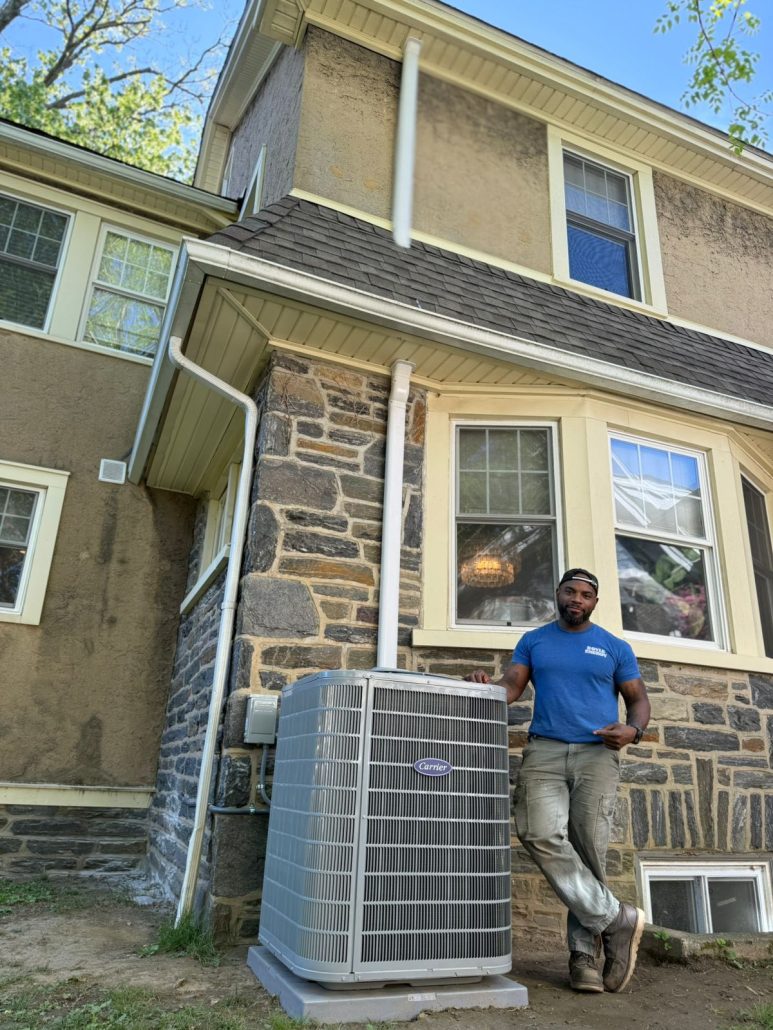
Wayne, PA homeowners most commonly deal with HVAC issues such as clogged air filters, frozen evaporator coils, refrigerant leaks, blocked condensate drain lines, thermostat failures, leaky ductwork, and humidity control problems.
Wayne’s humid continental climate, with summer humidity levels averaging 73% and temperatures reaching the mid-80s, combined with cold winters that push into the mid-20s, puts year-round stress on both heating and cooling systems. Most of these problems are preventable with annual professional maintenance. When they do occur, early diagnosis is the difference between a minor repair and a system replacement.
Wayne, PA sits along the Main Line in a stretch of Delaware County where the housing stock is often older, the lots are wooded, and the summers feel genuinely humid from late May through September. Temperatures can reach the high 80s and low 90s, and with average relative humidity sitting around 73% in the warmer months, your air conditioner is doing two jobs at once: cooling the air and pulling moisture out of it. Come winter, temperatures drop into the mid-20s and stay there for weeks at a time. That combination is hard on mechanical systems, and it shows up in specific, recurring patterns that local HVAC technicians see season after season.
As a trusted HVAC Company in Wayne, PA, Boyle Energy has been working in homes across this area since 1937. The problems they see most often are not random or unpredictable. They follow the logic of the climate, the age of the homes, and the gaps in routine maintenance. Understanding them ahead of time puts homeowners in a much stronger position.
1. Clogged Air Filters
It sounds too simple to be the leading cause of HVAC breakdowns, but dirty air filters are exactly that. When a filter clogs, the system can no longer pull enough air through the unit. The blower motor works harder, heat builds up in the equipment, and components start to fail in ways that could have been avoided entirely with a $10 filter change.
Many homeowners calling for AC Repair in Wayne, PA discover after the fact that a neglected filter set off a chain reaction that damaged far more expensive parts. The right change frequency depends on your home: households with pets or multiple occupants may need a monthly swap, while others can go 60 to 90 days between changes. The point is to stay consistent. It is one of the simplest ways to avoid the most avoidable HVAC issues in the book.
2. Frozen Evaporator Coils
During a hot and humid Wayne summer, your AC runs for long stretches. That extended operation under high humidity loads creates the right conditions for a counterintuitive problem: ice forming on the indoor evaporator coil. It looks alarming, and it should prompt immediate action.
Frozen coils happen for two reasons. The first is restricted airflow, almost always from a clogged filter or a blocked return vent. The second is low refrigerant, which prevents the coil from absorbing heat properly. In both cases, the right move is to turn the system off immediately and let the coil thaw completely before restarting. Running an air conditioner through a freeze cycle risks permanent damage to the compressor, and a failed compressor is one of the most expensive outcomes in any HVAC system. Signs of frozen coils include weak or warm airflow from the vents, visible ice on any part of the equipment, or water pooling around the indoor unit as the ice melts.

3. Refrigerant Leaks
When your system is low on refrigerant, the cause is always a leak somewhere in the refrigerant circuit. Simply adding more refrigerant without locating and sealing the source is not a real fix; it is a delay. And under EPA Section 608 regulations, only a certified technician can legally handle refrigerants, so this repair always requires a professional.
The signs of a refrigerant leak are fairly recognizable once you know what to look for: warm air blowing from the vents even on a low thermostat setting, a hissing or bubbling noise near the indoor or outdoor unit, ice forming on the refrigerant lines themselves, or a noticeable increase in the electricity bill without a corresponding increase in usage. Repair costs typically run between $200 and $1,500 depending on where the leak is and how extensive the damage. The risk of ignoring it is compressor failure, which pushes total replacement costs to $3,900 or more. Catching a refrigerant issue early is always significantly cheaper than catching it late.
4. Clogged Condensate Drain Lines
As your air conditioner operates, it draws moisture out of the air. That moisture drips off the evaporator coil and drains away through a condensate line. In Wayne’s humid summers, that line handles a substantial volume of water every day. Over time, algae, mold, and fine debris accumulate inside the line and eventually block it entirely.
When the drain backs up, water overflows the drain pan and can seep into ceilings, walls, and the surrounding structure. Sometimes the first sign is a wet spot on the ceiling below the air handler or a musty smell near the indoor unit rather than any obvious heating or cooling problem. HVAC issues that involve water damage are among the more expensive to resolve because they can affect both the equipment and the building materials around it. Flushing and clearing the condensate drain is a standard part of any professional tune-up, which is one of the reasons annual maintenance pays for itself.
If your system has not been serviced in the past year and you are heading into another Wayne summer, now is a good time to schedule a check with Boyle Energy. You can reach our team 24 hours a day at 610-446-2444. A single tune-up covers the condensate drain, filter, refrigerant pressure, and several other items that become problems if left unaddressed.
5. Thermostat Problems
A thermostat that is working poorly can make an otherwise functional HVAC system look broken. If it is misreading the indoor temperature because of a bad sensor or because it is mounted near a heat source, a drafty window, or directly below a supply vent, it will call for heating or cooling at the wrong times. The result is a house that never quite feels comfortable even though the equipment is technically running.
Short cycling, where the system kicks on and off every few minutes without completing a proper run cycle, is a common symptom of thermostat issues. It is also rough on the equipment. The startup sequence puts more stress on components than steady operation does, so a thermostat that causes repeated short cycles accelerates wear across the whole system. If rooms in your home feel inconsistently conditioned and the equipment seems to cycle oddly, ruling out a thermostat problem before assuming the issue is mechanical is a reasonable first step.
6. Leaky or Aging Ductwork
Wayne has a substantial number of homes built in the 1940s, 1950s, and 1960s. The ductwork in many of these properties is aging, and some of it was never properly sealed to begin with. Loose joints, gaps at connections, and deteriorated duct tape (which was not designed to last decades) allow conditioned air to escape into attics, crawlspaces, and wall cavities before it reaches the rooms it was meant to serve.
The symptoms of duct leaks tend to develop gradually, which is part of why they go unnoticed for so long. Rooms that feel stuffy no matter how long the system runs, noticeably uneven temperatures between floors, and utility bills that keep creeping up without an obvious reason are all consistent with significant duct leakage. According to the U.S. Department of Energy, leaky ducts can reduce system efficiency by 20% to 30%. For a home in Wayne running an aging system through hot summers and cold winters, that loss adds up over time and represents one of the more persistent HVAC issues that older construction tends to carry.
7. Poor Humidity Control
Given that Wayne’s relative humidity stays between 61% and 79% throughout the year, keeping indoor humidity at a comfortable level is a real challenge. An air conditioner dehumidifies the air as part of normal operation, but that only works well when the system is properly sized, running full cycles, and maintaining adequate refrigerant levels. When any of those factors are off, indoor humidity climbs even if the temperature reads correctly on the thermostat.
A home that feels clammy despite the AC running is a sign that the system is not keeping up with the moisture load. Beyond comfort, persistently high indoor humidity encourages mold and mildew growth inside the ductwork and on the evaporator coil, turning a comfort issue into an air quality concern. Some Wayne homeowners address this more directly with a whole-home dehumidifier integrated into the HVAC system, which takes the moisture management burden off the air conditioner and lets it focus on temperature control.
8. Aging Equipment That Has Run Its Course
Standard central air conditioners typically last 12 to 17 years. Gas furnaces can reach 15 to 30 years with consistent maintenance, though the lower end of that range is more realistic for systems that have not been serviced regularly. When equipment reaches its final years, HVAC issues start to compound. Repairs become more frequent, parts are harder to source, and efficiency drops to the point where the monthly utility cost makes a compelling argument for replacement on its own.
A useful benchmark for the repair-versus-replace decision is to multiply the repair cost by the age of the unit in years. If that number exceeds $5,000, replacement is generally the more economical path. It is not an absolute rule, but it captures the basic logic that investing heavily in an old, inefficient system is rarely the right financial move. If you are unsure how old your system is or whether a recent repair estimate makes sense for a unit at that age, Boyle Energy will give you a straight answer. They can be reached at 610-446-2444 (suburbs), 215-709-9196 (Philadelphia). As a family-owned company that has been serving Wayne and the surrounding communities since 1937, honest advice comes with the territory.
Getting Ahead of These Problems in Wayne
Most of what ends up being a costly emergency in July or a cold house in January started as something small that went unnoticed for a season or two. Annual HVAC maintenance, done in the spring before cooling season and ideally again in the fall before heating season, covers the items that cause the majority of breakdowns: filter condition, condensate drain flow, refrigerant pressure, thermostat calibration, and a component inspection while things are still in working order. For Wayne homeowners dealing with a humid summer climate and a housing stock that skews older, that kind of proactive attention is genuinely worth the investment.
Frequently Asked Questions
- Why is my AC running but not cooling the house?
The most common causes are a clogged air filter restricting airflow, low refrigerant from a leak, a dirty condenser coil on the outdoor unit, or a thermostat that is reading the temperature incorrectly. Start by checking the filter. If it is clean and the problem persists, the system needs a professional inspection to check refrigerant levels and coil condition. - How often should I change my HVAC filter in Wayne, PA?
Most homes should change filters every 60 to 90 days, but households with pets, allergies, or multiple occupants benefit from monthly changes. Wayne’s high year-round humidity and pollen levels during spring and fall can also shorten filter life. Checking the filter monthly and changing it when it looks visibly clogged is the simplest approach. - Why is there ice on my air conditioner?
Ice on the indoor unit or refrigerant lines usually means the system has either restricted airflow (from a dirty filter or blocked return vent) or low refrigerant from a leak. Turn the system off immediately and let it thaw completely before running it again. Running an air conditioner with frozen coils can permanently damage the compressor. Call a technician to determine the root cause before restarting. - What causes an HVAC system to short cycle?
Short cycling, when a system turns on and off in quick bursts without completing a full run, is commonly caused by a malfunctioning thermostat, an oversized system, low refrigerant, or a dirty air filter. It puts significant stress on compressor and motor components over time, so it should be diagnosed and corrected rather than ignored. - How do I know if my AC has a refrigerant leak?
Common signs include warm air coming from vents even at a low thermostat setting, a hissing or bubbling sound near the indoor or outdoor unit, ice forming on the refrigerant lines or indoor coil, noticeably higher indoor humidity, and a rising electricity bill without a change in usage. If you notice these symptoms together, turn the system off and call an HVAC technician. Refrigerant handling requires EPA Section 608 certification. - Why does my house feel humid even when the AC is running?
If the AC is running but indoor humidity remains high, the system may be short cycling and not running long enough to remove adequate moisture. Other causes include an undersized unit for the home, a refrigerant issue, or a clogged condensate drain line. Wayne’s naturally high ambient humidity can amplify this problem. A whole-home dehumidifier is worth considering if the AC alone consistently struggles to maintain comfort. - How long should an HVAC system last in Pennsylvania?
Central air conditioners typically last 12 to 17 years. Gas furnaces can last 15 to 30 years depending on maintenance, and heat pumps generally last 10 to 20 years. Pennsylvania’s climate, with hot and humid summers and cold winters, adds seasonal stress that can shorten that range for systems that are not maintained annually. A well-maintained system consistently outlasts a neglected one by 5 to 8 years. - Is it worth repairing an old HVAC system or should I just replace it?
A reliable way to think about this is to multiply the estimated repair cost by the age of the unit in years. If the result exceeds $5,000, replacement is usually the more cost-effective decision. Also factor in rising energy bills, which an aging and inefficient system will continue to generate. If you are unsure, get an honest assessment from a trusted local contractor before committing to either option.

Patrick Boyle brings over three decades of expertise to Boyle Energy, carrying forward a family legacy that began with his grandfather, Joseph Boyle Sr., the company’s founder. With extensive technical proficiency, Patrick holds advanced certifications in both oil and HVAC systems, ensuring the highest standards of service and performance. Additionally, he is recognized as an NPGA-certified propane service professional, underscoring his commitment to safety and industry best practices. Under his leadership, Boyle Energy continues to deliver reliable and efficient energy solutions, grounded in generations of trust and innovation.
