 Skip to content
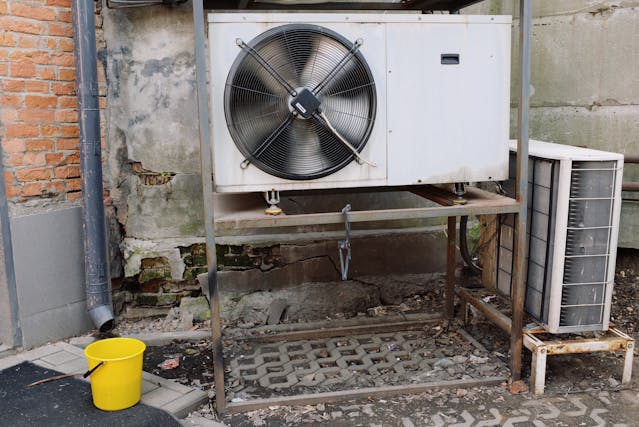
To protect your AC outdoor unit, place it in a shaded area away from direct afternoon sun, keep at least 2 feet of clearance around it, mount it on a raised concrete pad, use a breathable cover during off-season storage, clear debris regularly, and schedule annual professional maintenance. Taking these steps protects the compressor from overheating, prevents moisture and pest damage, and extends the life of your system by years.
Most homeowners think about their AC when it stops working. By then, the outdoor unit has often already taken on months or years of avoidable damage from sun, rain, debris, and neglect. If you want your system to last and run efficiently through Pennsylvania summers, knowing how to protect your AC outdoor unit is as important as knowing when to replace the filter. This guide walks through exactly what works, what to skip, and why it matters in a climate like Delaware County’s.
Why the Outdoor Unit Needs Active Protection
The condenser unit sitting outside your home is doing the hardest part of the cooling job. It pulls heat from your indoor air and pushes it outside. To do that, it needs airflow, a clean set of coils, and operating temperatures it can actually manage. When you leave it exposed to full summer sun, constant moisture, or accumulated debris, you are essentially asking it to work twice as hard for the same result, and that kind of strain adds up fast.
In a climate like Havertown’s, the HVAC air conditioning system deals with hot, humid summers, heavy spring and fall rain, and occasional winter ice. That is a wide range of stress for one piece of equipment parked outside year-round. The good news is that most of the protection strategies here are simple, low-cost, and something any homeowner can put in place.
How to Protect Your AC Outdoor Unit from Sunlight
Direct sun on the condenser raises the temperature of the air the unit is trying to pull in and expel heat into. That makes the whole heat exchange process less efficient. The compressor has to run longer, uses more electricity, and wears out faster. Here is how to address it.
Choose the Right Location at Installation
The north or east side of your home gets the least direct sun throughout the day. The west side gets hammered with intense afternoon sun, and the south side is not much better. If you are installing a new unit or replacing an old one, where it goes matters. Placing the unit in natural shade from the house itself can cut down on solar heat gain significantly.
Add Shade Without Blocking Airflow
If the unit is already installed in a less-than-ideal spot, you have options. Planting trees or tall shrubs a responsible distance away (not within 2 to 3 feet of the unit) can provide meaningful shade. Lattice panels or manufactured AC sun screens installed a few feet away on the sunniest side also work well. They block direct rays and windblown lawn debris without enclosing the unit or cutting off airflow.
Avoid solid enclosures or privacy structures built flush against the unit. They look tidy but restrict the airflow the condenser needs to expel heat, which defeats the purpose. When thinking about how to protect your AC outdoor unit from sunlight, the key principle is always shade without enclosure.
How to Protect Your AC Outdoor Unit from Rain
Rain itself is not the enemy. Outdoor condenser units are designed to get wet, and a summer rainstorm will not damage a properly installed unit. The problems come from flooding, long-term moisture accumulation, and storm debris.
Mount It on a Raised Pad and Ensure Drainage
Your unit should be sitting on a concrete pad that keeps it above ground level. This matters because standing water during heavy rain can reach internal electrical components if the unit is sitting directly on soil or in a low-lying area. Over time, concrete pads can also sink or shift, causing the unit to tilt, which puts stress on the refrigerant lines and compressor. Check the pad every season and have it releveled if needed.
Good drainage around the pad is equally important. The goal when thinking about how to protect your AC outdoor unit from rain is to make sure water flows away from the unit, not toward it.
Clear Debris Before and After Storms
Rain carries leaves, twigs, and dirt into the unit. After any significant storm, take a few minutes to clear the area around the condenser and gently rinse the exterior coil fins with a garden hose. Never use a pressure washer; the force will bend the aluminum fins and worsen the airflow restriction you are trying to prevent.
Keeping a 2-foot clearance zone clear of vegetation and debris at all times is the single most effective ongoing maintenance step you can take. The U.S. Department of Energy recommends keeping the area around your outdoor unit clear of leaves and debris as part of routine AC care.
If your outdoor unit is already showing signs of wear from sun or storm damage, the team at Boyle Energy handles AC repair in Delaware County and can assess the condition of your condenser before it turns into a bigger problem. Call us at +1 610-595-4685 to schedule a visit.

Protecting Against Debris, Pests, and Physical Damage
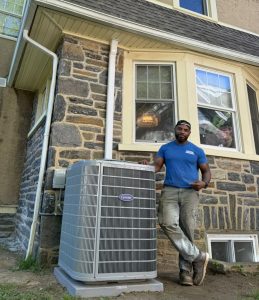
AC unit maintenance in Delaware County needs to account for more than just weather. Pests are a real and underestimated problem. Raccoons, squirrels, and cats can scratch coil fins, chew wiring, and damage the fan casing. Insects including wasps, ants, and spiders, build nests inside the unit and interfere with electrical components and moving parts.
Inspect the exterior of the unit every few weeks during the active season. Look for signs of nesting, chewed wires, or debris packed into the fins. A pest-proof mesh screen around the base perimeter can help, as long as it maintains the required airflow clearance. Additionally, lawn mower clippings are one of the most overlooked sources of debris. Always direct the mower away from the unit when mowing nearby, and consider a low screen or lattice barrier on the mower-facing side.
Using Covers Correctly
There is a lot of bad advice circulating about AC unit covers. Here is what actually matters. Breathable covers made from mesh or canvas are appropriate for off-season storage, specifically during the months when the unit is not running at all. They keep leaves, ice, and debris from collecting inside the unit over winter.
Plastic tarps or solid covers trap heat and moisture underneath. That accelerates corrosion on internal components rather than preventing damage, which is the opposite of what you want. And covers should always be removed completely before turning the system on in spring. Running the unit with a cover on can destroy the compressor in minutes.
Proper Clearance Is Non-Negotiable
This is one of the most frequently overlooked aspects of how to protect your AC outdoor unit. Building codes and manufacturer guidelines consistently require a minimum of 24 inches of clearance on all sides of the condenser, with at least 36 inches on the service access side and 60 inches of vertical clearance above the unit. These are not arbitrary numbers. They reflect the airflow the unit needs to reject heat efficiently.
Shrubs that seem harmlessly close can become a real problem as they grow. A plant that was 18 inches away at installation might be pressed against the unit fins two seasons later. Trim back any vegetation regularly and resist the temptation to use the space around the condenser for storage.
Annual Professional Maintenance Is the Foundation
Everything covered above is genuinely useful, but none of it replaces a professional seasonal inspection. A trained technician will clean the condenser coils properly, check refrigerant charge, inspect electrical connections for corrosion or wear, verify the pad is level, and catch early signs of storm or pest damage before they escalate. Scheduling this in early spring, before the cooling season starts, means your system is ready when you actually need it.
For homeowners across Havertown, Newtown Square, Wayne, and surrounding communities, Boyle Energy offers seasonal maintenance that covers all of the above. Call +1 610-595-4685 to get your system checked before summer gets underway. A little proactive care now is a lot cheaper than an emergency call in August.
FAQ: Protecting Your AC Outdoor Unit
Q1: Is it okay to run my AC during heavy rain?
Yes. Outdoor condenser units are designed and weatherproofed to operate in rain. Running your system during a typical rainstorm is completely safe. The only time you should shut the system off is if there is a risk of flooding around the unit or if you are expecting severe lightning in the immediate area.
Q2: Should I cover my AC unit in the winter?
A breathable mesh or canvas cover can be used to keep debris and ice out of the unit during the off-season months when it is not running. Avoid plastic covers, which trap moisture and cause corrosion. Never cover the unit while it is running. Remove the cover entirely before starting the system up in spring.
Q3: How much space does my outdoor AC unit need around it?
Most manufacturers and building codes require at least 24 inches of clearance on all sides of the outdoor condenser, a minimum of 36 inches on the service access side, and 60 inches of vertical clearance above the unit. These numbers ensure the unit can draw in and expel air efficiently without overheating.
Q4: Can I plant shrubs or bushes near my outdoor AC unit?
Yes, but carefully. Shrubs and plants should be kept at least 2 to 3 feet away from all sides of the unit. Strategic planting can even help shade the unit and modestly improve efficiency. The risk is overgrowth, so trim any nearby vegetation at the start of each season.
Q5: Does shading my AC unit actually save money?
It can. Shading the condenser reduces the ambient air temperature the unit has to work against when rejecting heat. Research cited by HVAC professionals suggests this can improve efficiency by around 10% and reduce annual cooling costs by $100 to $250, depending on the system size and climate.
Q6: What should I do after a storm to protect my AC unit?
Walk around the unit and clear away any leaves, branches, or debris. Check that nothing has been pushed into the coil fins. Gently rinse the exterior with a garden hose if needed. Check that the concrete pad has not shifted and that the unit is still sitting level. If you notice bent fins, damaged wiring, or standing water inside the base pan, call an HVAC technician before restarting the system.
Q7: How often should I have my outdoor AC unit professionally serviced?
Once a year, ideally in early spring before you need the system regularly. A professional tune-up includes condenser coil cleaning, refrigerant check, electrical inspection, and a general assessment of the unit’s condition. In a climate like Delaware County’s with hot humid summers and frequent storms, skipping this service means running blind on the unit’s health.
Q8: Why is my outdoor AC unit making noise after a rainstorm?
Some noise right after rain is normal, typically water dripping off the unit as it runs. If you hear rattling, grinding, or a new vibration that was not there before, it could mean debris entered the unit during the storm, a part has shifted, or water reached an electrical component. Turn the unit off and call a technician to inspect it before continuing to run it.

Patrick Boyle brings over three decades of expertise to Boyle Energy, carrying forward a family legacy that began with his grandfather, Joseph Boyle Sr., the company’s founder. With extensive technical proficiency, Patrick holds advanced certifications in both oil and HVAC systems, ensuring the highest standards of service and performance. Additionally, he is recognized as an NPGA-certified propane service professional, underscoring his commitment to safety and industry best practices. Under his leadership, Boyle Energy continues to deliver reliable and efficient energy solutions, grounded in generations of trust and innovation.
