
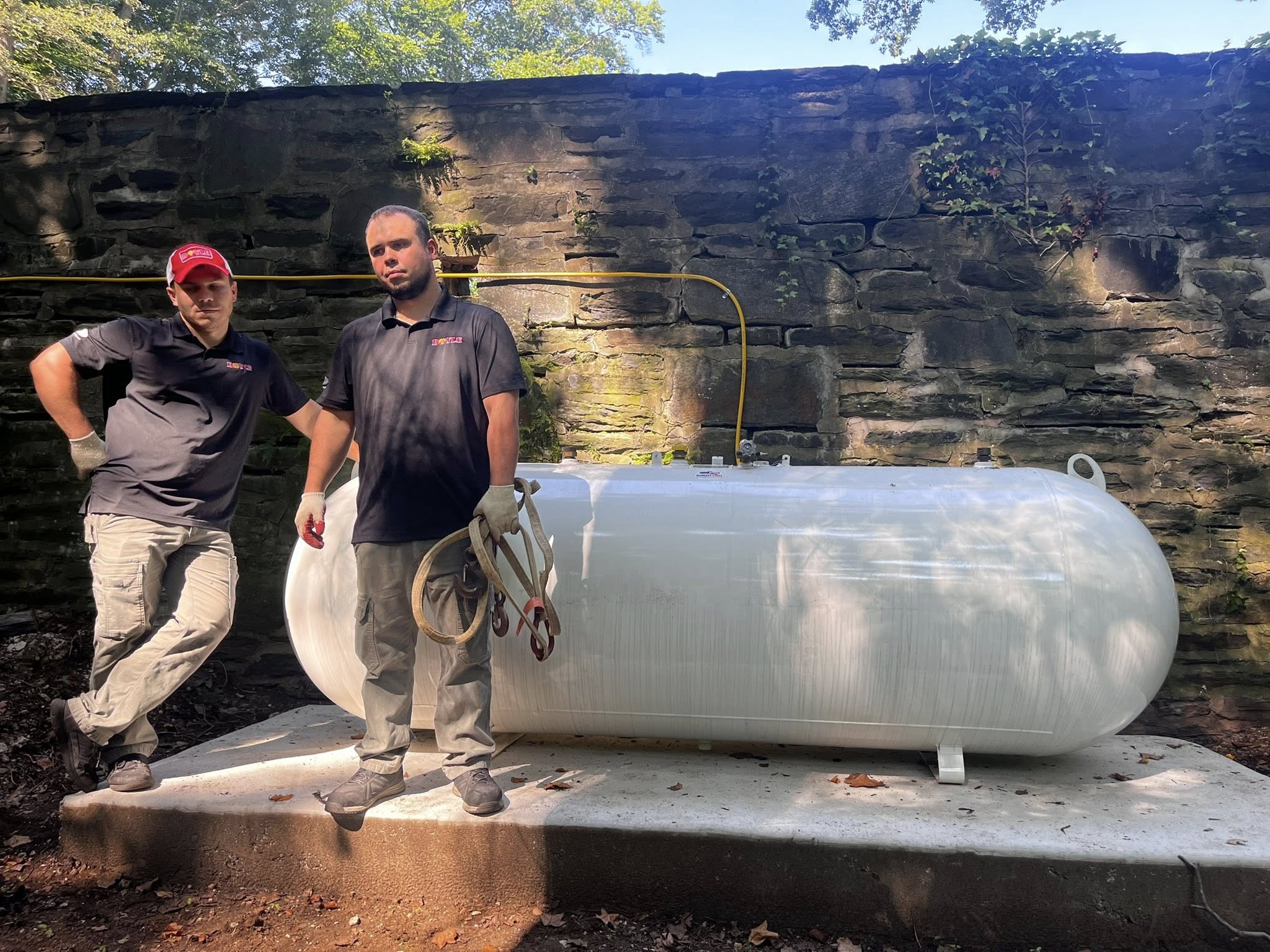
Propane tanks require visual inspections 2-3 times per year to check for rust, leaks, and valve damage, plus professional inspections every 5 years. Homeowners should perform soapy water leak tests, ensure tanks sit level on stable ground at least 10 feet from buildings, keep the area clear of debris, and maintain light-colored paint. Yes, propane tanks can safely remain outside during summer, though shade helps prevent pressure buildup from heat expansion.
Understanding What Your Propane Tank Actually Needs
Most Wayne homeowners don’t think much about their propane tank until something goes wrong. That’s a mistake. Your tank isn’t just a storage container sitting in your yard. It’s a pressurized system that needs regular attention to work safely and efficiently.
The good news? Propane tank maintenance isn’t complicated. You don’t need special tools or technical knowledge for most of it. What you do need is consistency. A few checks throughout the year will catch small issues before they become expensive problems or safety hazards.
Let’s talk about what actually matters when it comes to keeping your propane system in good shape.
The Visual Inspection You Should Do Three Times a Year
Walk out to your tank right now. Really look at it. Not just a glance as you’re heading to your car, but an actual inspection. You’re looking for four things.
First, rust. Some surface rust is normal, especially on older tanks. What’s not normal are deep pits or holes in the metal. If you can push your finger into a rust spot and feel it give way, that tank needs replacing. Light surface rust can be sanded down and repainted, but structural corrosion means the tank walls are compromised.
Second, check the paint color. Your tank should be white, beige, or another light reflective color. Dark paint absorbs heat and causes internal pressure to spike on summer days. If your paint is heavily peeling or if someone painted your tank a dark color, that’s a problem worth addressing.
Third, look at the valves. The main shutoff valve should turn smoothly without forcing it. The relief valve at the top should have its protective cover in place, and the small weep hole needs to be clear of dirt and debris. If any valve looks damaged, corroded, or won’t turn, don’t try to force it.
Fourth, smell and listen. Propane has that distinctive rotten egg smell added specifically so you can detect leaks. If you smell it near your tank, or if you hear any hissing sound, you’ve got a leak that needs immediate attention.
Do these checks in early spring, mid-summer, and late fall. It takes maybe five minutes each time.
The Soapy Water Test for Finding Leaks
Here’s the most reliable way to check for leaks without fancy equipment. Mix one part dish soap with three parts water in a spray bottle. Head out to your tank and spray this mixture on all the valve connections and fittings. Then slowly crack open the valve just slightly.
Watch for bubbles. Small bubbles mean a minor leak, usually at a connection that needs tightening. Large bubbles forming quickly indicate a bigger problem. No bubbles? You’re good.
If you do see bubbles, try tightening the connection first. Then test again. If bubbles persist, shut off the tank completely (turn the valve clockwise until it stops), and call your propane supplier. Don’t attempt to fix it yourself beyond tightening loose connections.
This test should be part of your seasonal inspection routine. It’s how professional technicians check for leaks too.

Keeping Your Tank Level and Properly Positioned
Your propane tank must sit level on stable ground. An unlevel tank puts constant pressure on gas lines and connections, which eventually causes leaks. The tank should rest on a concrete pad or heavy concrete blocks, never directly on soil.
Why does this matter so much in the Wayne area? Pennsylvania’s freeze-thaw cycles. The ground shifts throughout winter as water in the soil freezes and expands, then thaws and contracts. A tank sitting on bare ground can tilt or shift by spring. Check your tank’s positioning every April after the ground has thawed.
The tank also needs to be at least 10 feet from your house, garage, or any other building. This isn’t just a recommendation from propane companies in PA, it’s typically a code requirement. That distance protects your home if something goes wrong with the tank.
Keep the area around your tank clear too. No leaves, brush, debris, or storage within a 10-foot radius. Your delivery driver needs safe access to fill the tank, and emergency responders need clear access if there’s ever a problem. Plus, keeping vegetation trimmed back prevents moisture from collecting around the tank base, which accelerates rust.
If you’re scheduling propane tank delivery in Philadelphia and notice your tank has shifted or settled unevenly, mention it. The delivery technician can help assess whether the tank needs releveling before the next fill.
Summer Heat and Your Propane Tank
Can you leave a propane tank outside in summer? Absolutely. That’s exactly where it’s designed to be. But understanding how heat affects propane helps you avoid unnecessary worry.
Propane expands when it heats up. That’s why tanks are only filled to 80% capacity; the remaining 20% provides expansion space. On extremely hot days when temperatures exceed 120°F, your tank’s pressure relief valve might release a small amount of gas. You might hear a brief hiss or smell propane momentarily. This is the safety system working exactly as designed, preventing dangerous pressure buildup.
That said, keeping your tank in a shaded area when possible makes sense. Less direct sun means less heat absorption, which means more stable internal pressure and less work for the relief valve. If your tank sits in full sun all day, consider planting a shade tree several feet away or installing a simple shade structure. Just make sure whatever you add doesn’t interfere with the clearance requirements or block access.
Never try to cool down your tank by spraying it with water on hot days. The temperature shock can damage the metal and cause the tank to sweat, which accelerates rust.
What Professional Inspections Cover
Your propane supplier performs documented inspections at installation and then every five years after that. These go way beyond what you can check yourself. Technicians verify all valves, test for leaks with precision equipment, check the regulator, inspect the relief valve operation, measure distances from buildings, examine the tank base and anchoring system, and verify proper labeling and signage.
They’re also checking things you can’t easily see. The service valve threads, internal valve components, regulator venting, proper grounding for lightning protection, and whether the relief valve vents point in safe directions away from building openings.
For underground tanks, inspections include testing the cathodic protection system. This is typically a magnesium anode bag buried near the tank that prevents corrosion from soil contact. These systems must be tested at installation, after one year, and then every three years. If you have an underground tank and can’t remember the last time the cathodic protection was tested, that’s worth a phone call to your supplier.
Boyle Energy provides comprehensive tank inspections as part of our propane service throughout Delaware County and the surrounding areas. If you’re unsure about your tank’s inspection history or notice anything concerning during your own checks, give us a call at 610-897-7580 to schedule a professional evaluation.
Warning Signs That Need Immediate Attention
Some tank issues can wait for your next scheduled service. Others can’t. You need to know the difference.
Shut off your tank immediately and call for help if you notice any of these: persistent propane smell that doesn’t dissipate, continuous hissing sound from the tank or lines, visible dents or bulges in the tank body, stuck or damaged valves that won’t operate, bubbles during a leak test that persist even after tightening connections, heavy rust or corrosion around the collar or foot ring where the tank sits, or flames or discoloration near the relief valve.
After shutting off the tank, evacuate everyone from the area. Don’t flip light switches, start your car, or do anything that might create a spark. Call your propane supplier or 911 from a safe location away from the house.
For less urgent concerns like light surface rust, minor paint peeling, or questions about your tank’s positioning, a regular service call during business hours is fine.
Getting Professional Help When You Need It
Not every tank issue is a DIY project. If you’re uncomfortable performing any maintenance task, don’t force it. Propane is safe when handled correctly, but it’s still a pressurized flammable gas that deserves respect.
Professional propane technicians have the training and equipment to handle complex issues safely. They can relieve settled tanks, replace damaged valves, assess whether rust requires tank replacement, test regulator function and pressure settings, repair or replace relief valves, and address underground tank corrosion issues.
For Wayne homeowners looking for reliable propane service, Boyle Energy has been serving the area for years with experienced technicians who understand local conditions and requirements. They handle everything from routine maintenance to emergency repairs. Reach us at 610-897-7580 or visit their website to schedule service.
Your propane tank isn’t complicated, but it does require attention. A few minutes of inspection three times per year, combined with professional service when needed, keeps your system safe and reliable for years. Most tank problems give you plenty of warning before they become serious. Pay attention to those warnings, and you’ll avoid the headaches that come with emergency repairs or sudden equipment failures.
Frequently Asked Questions
- How often should I have my propane tank professionally inspected?
Your propane supplier performs a documented inspection every five years as part of regulatory requirements. However, they also conduct a visual pre-fill inspection before every delivery. Between professional inspections, you should do your own visual checks at least three times per year to catch obvious issues like rust, leaks, or positioning problems. - What should I do if I smell propane near my tank?
Immediately shut off the main tank valve by turning it clockwise, evacuate everyone from the area, avoid creating any sparks or flames, and call your propane supplier or 911 from a safe distance. Don’t go back to investigate or try to locate the leak yourself. Let professionals with proper equipment handle it. - Can I paint my propane tank myself?
Yes, but only with light-colored, reflective paint specifically approved for propane tanks. Never use dark colors that absorb heat. The tank must be empty before painting, and you should use paint designed to resist corrosion and withstand temperature fluctuations. Most propane suppliers can handle repainting as part of their service if you’d rather have professionals do it. - How do I know when my grill’s propane tank has expired?
Check the collar at the top of the tank for a stamped date in month-year format. The tank must be recertified 12 years from that manufacture date, then every five years after the first recertification. If the date shows the tank is past its certification period, you cannot legally refill it. Most exchange programs automatically provide certified tanks. - Is it normal for my propane tank to make noise during hot weather?
A brief hissing sound on very hot days (above 120°F) is normal. That’s the pressure relief valve releasing a small amount of gas to prevent dangerous pressure buildup from heat expansion. If the hissing is continuous, loud, or happens on mild days, that indicates a problem requiring professional attention. - Should I cover my propane tank in winter?
No. Propane tanks are designed to withstand winter weather without covers. A cover can actually trap moisture against the tank, which accelerates rust and corrosion. The tank needs ventilation around all sides. However, you should keep snow cleared from around the tank so delivery drivers can access it safely. - How can I tell if my propane tank needs to be replaced?
Deep pitting or holes in the metal from corrosion, visible dents or bulges in the tank body, valves that are damaged beyond repair, extensive rust that can’t be addressed with sanding and repainting, or if the tank has been in a fire or flood. Surface rust alone doesn’t mean replacement is necessary, but a professional inspection can determine whether the damage is superficial or structural.
8. What happens if my propane tank isn’t level?
An unlevel tank puts constant stress on gas lines and connections, eventually causing leaks. It also affects the gauge accuracy and can cause improper venting of the relief valve. If you notice your tank has tilted or settled, contact your propane supplier to have it releveled before the next delivery. This is especially important after winter when ground freeze-thaw cycles can shift tank positioning.

Patrick Boyle brings over three decades of expertise to Boyle Energy, carrying forward a family legacy that began with his grandfather, Joseph Boyle Sr., the company’s founder. With extensive technical proficiency, Patrick holds advanced certifications in both oil and HVAC systems, ensuring the highest standards of service and performance. Additionally, he is recognized as an NPGA-certified propane service professional, underscoring his commitment to safety and industry best practices. Under his leadership, Boyle Energy continues to deliver reliable and efficient energy solutions, grounded in generations of trust and innovation.
