 Skip to content
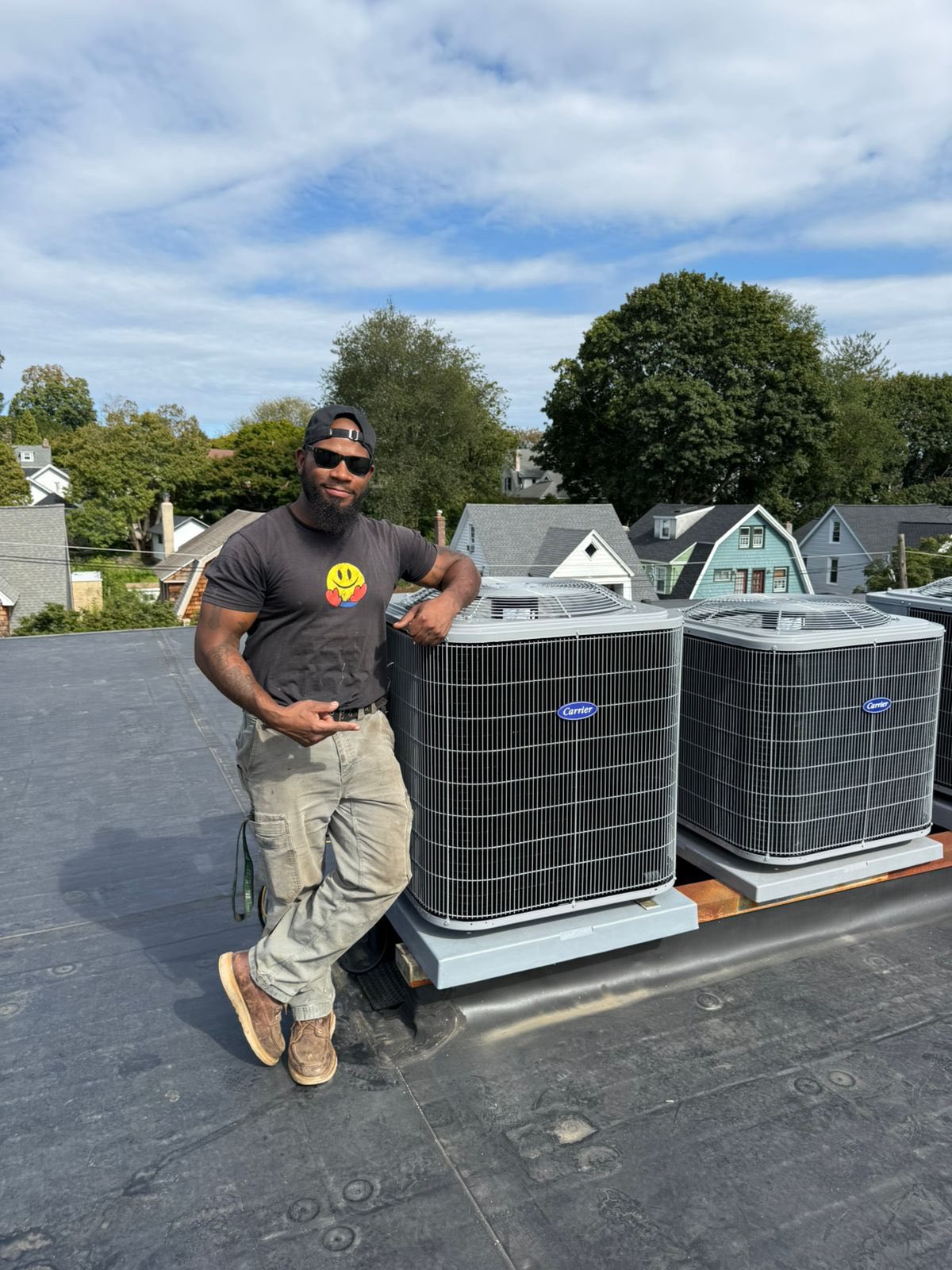
In Delaware County and the greater Philadelphia area, the right time to turn on your AC in spring is when outdoor temperatures are consistently at or above 65°F, typically from mid-to-late April onward. Running your air conditioner below 60°F can damage the compressor and freeze the coils. Before your first startup, check for debris around the outdoor unit, replace the air filter, and schedule a professional AC tune-up to catch any issues left over from winter. Most homeowners in Havertown, Newtown Square, and surrounding areas are safely running their AC by early May.
Why Timing Matters More Than You Think
Spring in Delaware County is one of the most unpredictable weather seasons of the year. A Tuesday in April might hit 74°F and feel like early summer. Wednesday morning? Back down to 48°F. That kind of temperature swing is completely normal for southeastern Pennsylvania, and it’s exactly why the question of when to turn on ac in spring deserves more than a one-line answer.
The short version is this: wait until outdoor temperatures are consistently at or above 65°F before running your central air conditioning system. Most manufacturers set 60°F as the absolute minimum, but HVAC professionals will tell you there’s not much of a safety cushion between 60°F and 65°F. At or below those temperatures, the lubricating oil inside your compressor thickens, refrigerant can fail to fully vaporize and flow back as liquid into the compressor, and your evaporator coil can freeze solid. The compressor is the single most expensive component in your outdoor unit, and replacing it typically runs between $1,200 and $2,500. That’s a steep price to pay for turning the AC on two weeks too early.
What Delaware County Spring Weather Actually Looks Like
Based on NOAA climate normals for southeastern Pennsylvania, April temperatures in the Philadelphia suburbs generally fluctuate between highs in the upper 50s to mid-60s early in the month, climbing to highs in the low-to-mid 70s by late April. May is when things stabilize, with consistent daytime highs in the upper 60s to mid-70s. That’s also when you can confidently leave your system running without watching the overnight low every evening.
For spring 2026 specifically, NOAA’s seasonal outlook places Pennsylvania in an “equal chances” zone for temperature, meaning no strong lean toward warmer or cooler than average conditions. What that translates to practically is that you should expect the usual variability: some warm stretches that make you reach for the thermostat, followed by cool days where opening a window is the smarter move. Don’t let one warm weekend in late March convince you to fire up the system for the season. That’s a pattern that catches a lot of Delaware County homeowners off guard every year.
A useful rule: if the overnight low is still regularly dipping below 55°F, hold off. If you’re seeing consistent daytime highs above 70°F and nights staying above 60°F, it’s time.

Before You Flip That Switch: The Spring Startup Checklist
When to turn on ac in spring is one question. Whether your system is actually ready to run is a different one. After sitting idle through fall and winter, your AC needs a quick inspection before you call for cooling. Here are the steps every homeowner should run through:
- Remove any cover you placed over the outdoor condenser unit during winter. This sounds obvious, but it’s an easy thing to forget and a covered unit will overheat quickly.
- Clear debris from around and on top of the outdoor unit. Leaves, seed pods, mulch, and dirt accumulate over winter and restrict airflow. Maintain at least 18 to 24 inches of clearance around the entire unit.
- Replace your air filter. If you haven’t changed it since last cooling season, it’s past due. A clogged filter restricts airflow across the evaporator coil and can cause the system to run inefficiently from the first day of the season.
- Check that all supply vents inside the house are open and that return grilles are not blocked by furniture or rugs. Closed vents don’t save energy; they create pressure imbalances that strain the system.
- Check the refrigerant lines (the insulated pipes running from the outdoor unit into the home) for any visible cracks or damage to the insulation. Damaged line insulation reduces efficiency and raises cooling costs.
- Flip the breaker for the AC back on if you turned it off for winter, then wait 24 hours before running the system. This gives the crankcase heater time to warm the compressor oil, which is especially important after a long cold period.
- Set your thermostat to COOL mode, lower the setpoint 2 to 3 degrees, and let the system run for 10 to 15 minutes. Confirm that cool air is coming through the vents and that the home temperature is trending down. If you hear grinding or banging noises, smell something burning, or get no cool air after 15 minutes, shut it off and call a technician.
You can also run the system in fan-only mode on cool spring days to circulate fresh air without engaging the compressor. This is completely safe at any outdoor temperature and is a great way to ventilate the house after a long winter without risking equipment damage.
Why a Pre-Season AC Tune-Up is Worth It in Delaware County
Running through the homeowner checklist above is a good start, but there’s a category of inspection and maintenance that genuinely requires a licensed technician. Checking refrigerant charge with a manifold gauge set, testing capacitors and contactors, inspecting electrical connections, and cleaning coils are not DIY tasks. They require certifications, specialized tools, and experience.
Low refrigerant charge is one of the most common causes of AC inefficiency and compressor failure, and it produces no obvious visible symptom until the system is significantly undercharged. A technician can measure the actual charge and, if it’s low, locate and fix the underlying leak rather than just topping it off. An ac tune up also covers coil cleaning, which matters more than many homeowners realize. Dirty coils reduce the system’s ability to transfer heat, forcing it to run longer cycles, consume more energy, and put extra wear on every moving component.
Scheduling this in March or April also makes practical sense for our area. Once the first real heat wave hits in late May or June, HVAC companies across Delaware County and the Philadelphia suburbs book out fast, sometimes 2 to 4 weeks out. Getting ahead of the rush means faster service, more scheduling flexibility, and the peace of mind of knowing the system has been professionally inspected before you depend on it every day.
If you’re in Havertown, Newtown Square, or anywhere in Delaware County and want to get your system checked before the season heats up, the team at Boyle Energy is a good place to start. They’ve been servicing HVAC systems in this area since 1937 and offer annual tune-up plans that cover everything a pre-season inspection should include.
Setting Your Thermostat Right When the Time Comes
Once you’ve confirmed outdoor temperatures are consistently above 65°F and the system has passed its startup check, there’s still the question of what to actually set the thermostat to. The U.S. Department of Energy recommends 78°F as the starting point for cooling season efficiency. For every degree you raise the setpoint from a lower number, you save roughly 3% on your cooling bill.
That said, comfort is personal and 78°F is a guideline, not a rule. A more practical approach for spring in Delaware County, where temperatures swing significantly between day and night, is to use a programmable or smart thermostat with separate day and night settings. Set it to cool to around 76°F to 78°F during the afternoon when it’s warmest, and raise the setpoint to around 82°F overnight when cooler outdoor air makes a ceiling fan more than sufficient.
On days when outdoor temperatures drop back below 65°F, which does happen in April and even occasionally in May in our area, switch the AC off entirely and open some windows. Spring ventilation is free cooling. Don’t burn compressor cycles when the outside air is already doing the job.
Is It Time to Consider a New System?
If your existing system is over 12 to 15 years old, struggling to maintain temperature on warm days, short cycling, or making unusual noises, the pre-season tune-up conversation might also be the right time to discuss replacement. High efficiency air conditioners manufactured today use significantly less energy than systems from even ten years ago, and they’re built with better low-ambient controls that handle spring’s variable temperatures more reliably. If your system is aging and repair estimates are climbing, a conversation with a local HVAC contractor about your options is well worth having before the heat season starts.
When it comes to your HVAC air conditioning system, a spring startup isn’t just about flipping a switch. It’s about making sure a piece of equipment you’ll depend on for the next five months is clean, properly charged, mechanically sound, and set up to run efficiently. That work done in April pays dividends every month through September.
Ready for the Season?
If you want a local HVAC professional to handle the pre-season inspection, Boyle Energy serves Havertown, Delaware County, Chester County, Montgomery County, and Philadelphia. Give them a call at 610-897-7580 to schedule your spring tune-up before the busy season hits.
Frequently Asked Questions
When should I turn on my AC for the first time in spring? Wait until outdoor temperatures are consistently at or above 65°F before running your central air conditioner. In Delaware County and the Philadelphia suburbs, that typically means mid-to-late April at the earliest, with early May being more reliably safe. Turning it on during a cold snap, even one warm afternoon, risks compressor damage.
What happens if I run my AC when it’s too cold outside? Running your AC below 60°F can cause the compressor oil to thicken, the evaporator coil to freeze, and liquid refrigerant to flow back into the compressor. Any of these can cause serious and expensive damage. Compressor replacement alone costs $1,200 to $2,500 or more, so it’s not worth the risk.
What temperature should I set my AC to in spring? The U.S. Department of Energy recommends 78°F during the day as a good balance of comfort and efficiency. In spring, when nights are cooler, you can raise the setpoint to 82°F overnight and open windows instead of running the AC. Adjust based on personal comfort, and use a programmable thermostat to automate these changes.
Do I need to do anything before turning on my AC after winter? Yes. At minimum: remove the outdoor unit cover if you used one, clear debris from around the condenser, replace the air filter, confirm vents are open, and run a short 10-to-15 minute test to make sure it’s cooling properly. If anything sounds or smells wrong, shut it off and call a technician.
How often should I get my air conditioner professionally tuned up? Once a year is the standard recommendation from HVAC manufacturers and most industry professionals. The ideal time for an AC tune-up is spring, before the cooling season begins. An annual tune-up catches low refrigerant, dirty coils, worn electrical components, and drainage issues before they become costly mid-summer breakdowns.
Can I turn on my AC just to test it on a cold spring day? You can safely run the system in fan-only mode at any outdoor temperature. However, you should not engage the cooling function (compressor) when it’s below 60°F outside. If the outdoor temperature has been above 60°F for a few consecutive days, a brief 10-to-15 minute test cycle is fine to verify the system is working.
Why is my AC not cooling well the first time I turn it on in spring? Common causes include a dirty or clogged air filter, debris blocking the outdoor condenser, low refrigerant charge from a slow leak that developed over winter, or a frozen evaporator coil from being run in cool outdoor temperatures. Start by checking the filter and outdoor unit. If the problem persists after a few minutes, shut the system off and schedule a service call.
Is spring a good time to replace an old air conditioner? Spring is generally a good time, because HVAC contractors are not yet at peak demand, lead times for equipment are shorter, and you have time to get the new system installed and tested before the first real heat arrives. If your system is more than 12 to 15 years old and repair costs are adding up, getting an estimate in March or April is a smart move.

Patrick Boyle brings over three decades of expertise to Boyle Energy, carrying forward a family legacy that began with his grandfather, Joseph Boyle Sr., the company’s founder. With extensive technical proficiency, Patrick holds advanced certifications in both oil and HVAC systems, ensuring the highest standards of service and performance. Additionally, he is recognized as an NPGA-certified propane service professional, underscoring his commitment to safety and industry best practices. Under his leadership, Boyle Energy continues to deliver reliable and efficient energy solutions, grounded in generations of trust and innovation.
