 Skip to content
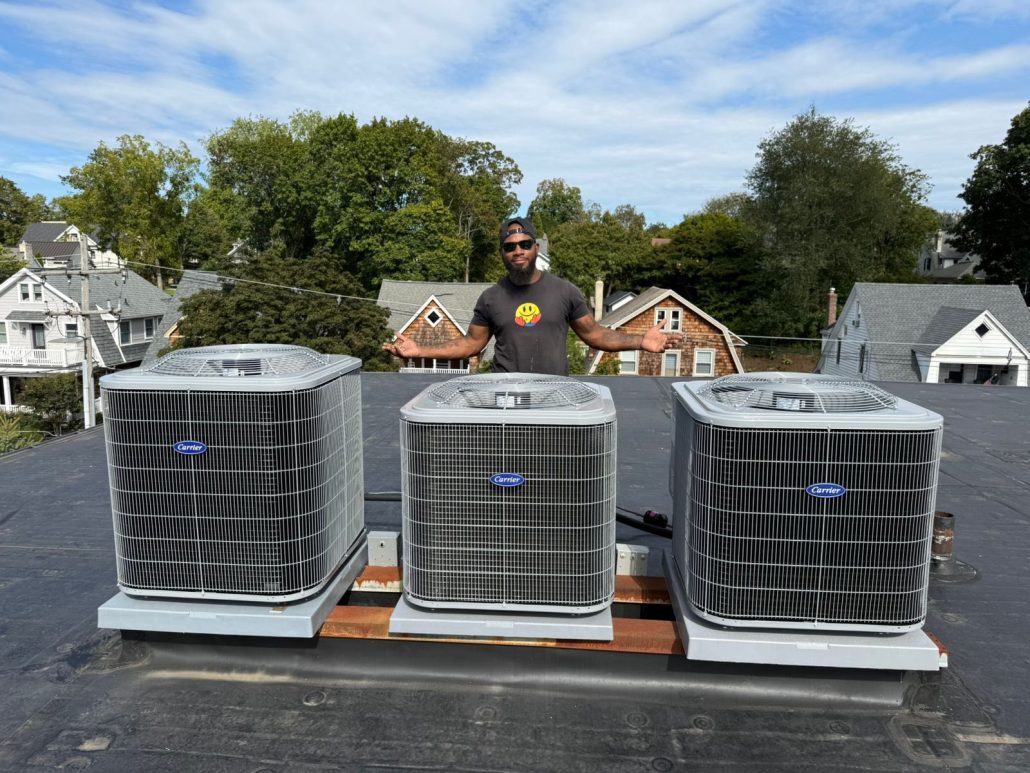
An HVAC spring tune-up involves a licensed technician inspecting, cleaning, and testing your air conditioning system before the summer cooling season begins. The technician checks refrigerant levels, cleans the condenser and evaporator coils, tests electrical components, clears the condensate drain, and verifies thermostat calibration. For homeowners in Delaware County and across the Philadelphia suburbs, scheduling this service in March or April helps prevent breakdowns during the first summer heat wave, extends equipment life, and keeps energy bills in check.
You’ve made it through another Philadelphia-area winter. The heat ran its course, the oil or gas did its job, and now the temperatures are climbing back up. At some point in the next few weeks, you’re going to reach for that thermostat, flip it to cool, and expect the AC to kick on without a hitch. For a lot of homeowners in Havertown, Drexel Hill, Newtown Square, and surrounding communities, that expectation holds. For others, it doesn’t. The difference usually comes down to one thing: whether the system was properly serviced before summer started. As a trusted HVAC company in Philadelphia and Delaware County, Boyle Energy has seen both outcomes. What follows is a clear, practical explanation of exactly what happens during a spring tune-up and why every step of it matters.
Why Spring Is the Right Time for a Tune-Up
Most AC breakdowns happen during the first heat wave of the season. That’s not a coincidence. After sitting idle through a long winter, systems are put under sudden, maximum demand, often at the worst possible time. The parts that are on the edge, a worn capacitor, a slightly clogged drain, a refrigerant charge that’s a little low, don’t reveal themselves until the system is working hard. By then you’re calling for emergency service on a 95-degree July afternoon, competing for a technician’s availability with every other homeowner in the same boat. Spring maintenance catches those problems before they become emergencies. It’s also significantly cheaper. A capacitor replaced during a scheduled tune-up costs a fraction of what it costs on an emergency call, and that’s before you factor in potential compressor damage from a capacitor that fully fails.
ENERGY STAR recommends scheduling the cooling system check each spring and coordinating it with the time change as an easy annual reminder. For Pennsylvania homeowners specifically, early to mid-April is the sweet spot. It’s warm enough to test the cooling system properly, but you’re still ahead of the summer rush when HVAC technicians start running packed schedules.
The HVAC Spring Tune-Up Checklist: What a Technician Actually Does
Here’s a realistic walkthrough of what a qualified technician does during a thorough spring visit. This isn’t a marketing checklist; it’s the actual work. A proper HVAC spring tune-up checklist covers both the outdoor and indoor units, the electrical system, the refrigerant circuit, and the airflow path from one end of the system to the other.
Starting outdoors:
- The outdoor condenser unit is inspected and the coils are cleaned. Condenser coils release the heat pulled from inside your home to the outside air. When they’re coated in dirt, pollen, and debris accumulated over the fall and winter, that heat transfer is impaired. The system has to work harder, run longer, and consume more electricity to maintain the same temperature. Dirty condenser coils are one of the most common reasons energy bills spike in summer.
- Refrigerant levels are checked using a calibrated gauge. Refrigerant is the substance that actually makes the cooling process happen. Low refrigerant doesn’t just reduce cooling performance; it puts strain on the compressor, which is the most expensive part of the system to replace. Only EPA Section 608-certified technicians can legally handle refrigerant, so this is not a DIY task under any circumstance.
- The capacitor and contactor are inspected. The capacitor gives the compressor and fan motors the electrical boost they need to start up. The contactor is essentially the switch that turns the system on when the thermostat calls for cooling. Both are relatively inexpensive parts that wear out over time, and both can cause the entire outdoor unit to fail when they go. Catching a failing capacitor during a spring tune-up is one of the highest-value moments in HVAC maintenance.
- Electrical connections are tightened and voltage and current readings are taken on the motors. Loose or corroded connections are a leading cause of premature component failure and can create safety hazards. This step is part of every HVAC spring tune-up checklist worth its name.
- The area around the outdoor unit is checked for adequate clearance. At least two feet of clearance on all sides is needed for proper airflow. Overgrown shrubs or stored items right up against the unit are a more common problem than most homeowners realize.

Moving indoors:
- The evaporator coil is inspected for dirt buildup. This is the indoor coil where the refrigerant absorbs heat from your home’s air. When it gets coated with dust and particulates that slip past the filter, it loses efficiency. In worse cases, airflow restriction causes the coil to freeze, which shuts the system down completely and can take hours to thaw before the system will run again.
- The condensate drain line is checked and cleared. When your AC runs, it removes humidity from the air as well as heat. That moisture has to drain somewhere, and it does so through a condensate line. Algae, mold, and debris build up in this line over time. A clogged drain causes water to back up into the system, potentially damaging internal components and promoting mold growth inside the air handler. Pouring a cup of diluted white vinegar down the drain line annually, between professional visits, is a good way to slow that buildup.
- The blower motor and fan are inspected and lubricated where applicable. The blower is what moves conditioned air through your ductwork and into every room of the house. A struggling blower means reduced airflow, uneven temperatures from room to room, and a higher electricity draw every hour it runs.
- Air filters are evaluated and replaced as needed. This is the single most impactful ongoing maintenance task for any homeowner, and the one most frequently neglected. In the spring, Delaware County homes deal with significant pollen loads that can clog filters faster than usual. A clogged filter restricts airflow across the entire system, forcing every downstream component to work harder.
Final checks:
- The thermostat is calibrated and the system is tested through a full operational cycle. The technician confirms the system is transitioning properly from heating to cooling mode and that the thermostat is calling accurately. In spring across Eastern Pennsylvania, temperatures can swing 30 to 40 degrees within a single day, so thermostat reliability matters more than it might in a more stable climate.
- The temperature split (also called delta-T) is measured. This is the difference in temperature between the air going into the return vent and the air coming out of the supply vent. A normal split is typically 15 to 20 degrees Fahrenheit. If the number is outside that range, it tells the technician something meaningful about refrigerant levels, airflow, or coil performance.
- Visible ductwork is inspected for obvious leaks or disconnections. Full duct cleaning is a separate service, but a visual check during a tune-up can flag obvious problems. Older homes in Delaware County and across the Philadelphia suburbs often have aging ductwork that develops gaps at the seams over time, which is a surprisingly common source of inefficiency and uneven cooling.
If you haven’t scheduled a spring visit yet, now is a good time to get it on the calendar before the summer rush fills up available slots. Boyle Energy offers HVAC maintenance for homeowners across Delaware County, Chester County, Montgomery County, and Philadelphia. You can reach our team at 610-446-2444 to schedule. Mention you’d like the spring tune-up, and the team will take care of the rest.
How Long Does an HVAC Spring Tune-Up Take?
For a standard central air conditioning system, expect the visit to take about an hour. If the technician discovers the refrigerant charge is low and needs to add refrigerant, budget an additional 30 to 45 minutes for that process. More complex systems, or homes where access to components is difficult, may take a bit longer. The important thing is not to rush it. A tune-up that wraps up in 20 minutes is not a tune-up.
What About Oil Boilers and Fuel-Based Heating Systems?
This is worth a specific mention for Delaware County homeowners, because a significant portion of homes in this area heat with fuel oil or propane rather than natural gas. Many of these households also run central air conditioning separately. For those homes, a spring tune-up focuses on the AC side of the system, while the heating system gets its own annual service in the fall. Boyle Energy handles both, which simplifies things considerably. The team services gas boilers, gas furnaces, and oil-fired equipment in addition to providing a full heating and air conditioning repair service. If you’ve been using one company for the AC and another for the oil service, consolidating with a single provider tends to be more efficient and often catches cross-system issues that fall through the cracks otherwise.
Does a Spring Tune-Up Actually Save Money?
The short answer is yes, consistently. A well-maintained system runs more efficiently than a neglected one. Studies and utility-supported data show that dirty coils and components can increase energy consumption by 20 to 40 percent. For a household running the AC through a Delaware County summer, that’s a meaningful number on the utility bill. The ENERGY STAR program consistently notes that pre-season maintenance is one of the most reliable ways to keep a cooling system performing at rated efficiency.
Beyond energy savings, regular maintenance reduces the likelihood of expensive mid-season repairs. A capacitor replacement on a scheduled visit is a small cost. A compressor replacement because a failing capacitor was never caught is thousands of dollars. The tune-up also matters for manufacturer warranties. Many HVAC brands require documented annual maintenance by a qualified technician as a condition of honoring the warranty on major components like the compressor. Skipping maintenance doesn’t just cost money in repairs; it can void the coverage you paid for when the equipment was installed.
What Delaware County Homeowners Should Know Specifically
A few things make this region worth calling out specifically. Delaware County summers are consistently hot and humid. Humidity is a comfort variable that’s separate from temperature, and an AC system that’s running but not managing moisture effectively can make a home feel uncomfortable even when the thermostat reads 72 degrees. Part of a thorough tune-up is confirming the system is actually dehumidifying properly, not just cooling.
Many homes in Havertown, Upper Darby, Broomall, and surrounding neighborhoods were built in the mid-20th century. They have aging ductwork, sometimes mixed system types (a boiler for heat and a split AC for cooling), and layouts that create airflow challenges. A technician who understands the mix of equipment common in this area will do a better job than one used to only newer construction. The Boyle Energy team has been serving this specific geography since 1937, which is a meaningful depth of local experience when it comes to Havertown HVAC work.
One more thing to ask your technician about this spring: refrigerant type. The R-410A refrigerant used in most current systems is being phased out of new equipment under EPA regulations that took effect in 2025. If your system uses R-410A and is getting older, your spring tune-up is a good time to have a candid conversation about the system’s remaining useful life and what replacement would look like, so you’re planning ahead rather than reacting.
Ready to Schedule? Here’s What to Do Next
Spring tune-up season fills up faster than most homeowners expect, especially in communities like Havertown, Newtown Square, and Drexel Hill where a lot of homes are running similar-vintage equipment. The HVAC spring tune-up checklist we’ve walked through here represents the standard that Boyle Energy holds every visit to, whether it’s a newer high-efficiency Carrier system or an older setup that’s been running for 20-plus years.
Boyle Energy is a family business serving Delaware County, Chester County, Montgomery County, and Philadelphia since 1937. Our certified technicians are authorized Carrier dealers and handle everything from routine spring maintenance to full system replacements. To schedule your spring tune-up, call 610-446-2444 or visit boylebrothersenergy.com. 24-hour service is available for emergencies. Getting this done in April puts you in good shape before the summer heat arrives.
Frequently Asked Questions
Q: What exactly is included in an HVAC spring tune-up checklist?
A: A thorough HVAC spring tune-up checklist covers the outdoor condenser coil cleaning, refrigerant level check, capacitor and contactor inspection, electrical connection tightening, evaporator coil inspection, condensate drain line clearing, blower motor check, air filter evaluation, thermostat calibration, and a full system operational test. The visit typically takes about an hour for a standard central AC system.
Q: How much does an HVAC spring tune-up cost?
A: Most professional HVAC spring tune-ups cost between $80 and $200 depending on the provider, your location, and whether any additional work is needed. Many HVAC companies, including Boyle Energy, offer annual maintenance plans that bundle the cost of spring and fall tune-ups at a lower per-visit rate. Call 610-446-2444 for current pricing.
Q: Can I skip the spring tune-up if my AC seemed fine last summer?
A: It’s a common thought, but not a reliable indicator. Components like capacitors and contactors can degrade over winter and show no symptoms until they fail under load. Most AC breakdowns happen during the first heat wave of the season, when systems run hard for the first time. A spring tune-up specifically targets those at-risk components before the summer stress test.
Q: How often should I get my HVAC system serviced?
A: At minimum, once a year per system type. ENERGY STAR recommends a cooling system check each spring and a heating system check each fall. If you have a heat pump, which runs year-round for both heating and cooling, twice-yearly service is standard. Homeowners on maintenance plans typically find it easier to stay on schedule since visits are pre-arranged.
Q: What are signs I need an HVAC tune-up right now?
A: Higher-than-normal energy bills, rooms that aren’t cooling evenly, the system running for longer cycles without reaching the set temperature, unusual noises like grinding or squealing, or visible moisture around the indoor unit all suggest the system needs attention. You shouldn’t wait for a complete breakdown to call; those are warning signs that a tune-up or repair visit can address early.
Q: Does getting an HVAC tune-up help with indoor air quality?
A: Yes, directly. Replacing a clogged filter, clearing the condensate drain to prevent mold growth inside the air handler, and cleaning the evaporator coil all improve the quality of air circulating through your home. This matters especially in spring, when pollen counts in the Philadelphia metro area are high and airborne allergens are more likely to collect in and around your HVAC system.
Q: Will a spring tune-up keep my HVAC warranty valid?
A: For many manufacturers, yes. Several major HVAC brands require documented annual maintenance by a certified technician as a condition for honoring the equipment warranty, particularly on expensive components like the compressor. It’s worth checking your warranty documentation. If Boyle Energy installed your system, the team can walk you through what your specific coverage requires.
Q: What’s the best time to schedule an HVAC spring tune-up in Delaware County?
A: March through mid-April is ideal for the Philadelphia suburbs. It’s warm enough to test the cooling system properly but early enough that you beat the summer rush when HVAC technicians get backlogged. Waiting until May or June means competing with emergency calls and significantly reduced scheduling flexibility.

Patrick Boyle brings over three decades of expertise to Boyle Energy, carrying forward a family legacy that began with his grandfather, Joseph Boyle Sr., the company’s founder. With extensive technical proficiency, Patrick holds advanced certifications in both oil and HVAC systems, ensuring the highest standards of service and performance. Additionally, he is recognized as an NPGA-certified propane service professional, underscoring his commitment to safety and industry best practices. Under his leadership, Boyle Energy continues to deliver reliable and efficient energy solutions, grounded in generations of trust and innovation.
