 Skip to content
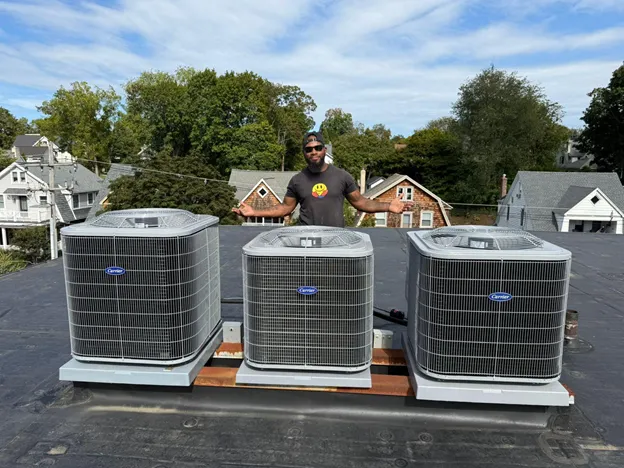
If your HVAC system is blowing warm air, short-cycling, making unusual noises, or struggling to control indoor humidity in summer, it is showing signs it is not ready for warmer weather. In the greater Philadelphia area, including Delaware County, Chester County, and Montgomery County, the combination of high heat and humidity puts significant strain on cooling systems. A professional spring tune-up, ideally scheduled in April or May before peak demand, is the most reliable way to catch problems before they become emergency breakdowns. Boyle Energy, based in Havertown, PA, provides full HVAC inspection and repair services across the region.
Spring in the Philadelphia suburbs has a way of sneaking up on you. One week you are still running the furnace at night, and the next you are wondering why your house feels stuffy at 78 degrees. That first stretch of genuinely warm weather is the moment homeowners find out whether their HVAC system is actually ready for summer, and it is not always a pleasant discovery.
The greater Philadelphia region, including Havertown, Delaware County, Chester County, and Montgomery County, is served by some excellent heating and air conditioning companies, and for good reason: our climate demands it. This area sits in a humid subtropical climate zone, which means your air conditioning system is not just fighting heat when summer arrives. It is also fighting moisture, and lots of it. Average humidity levels here run between 67% and 72% through the summer months, with August afternoons that can feel oppressive even before temperatures hit 90°F. A system that holds up fine in a drier climate will often struggle or fail completely in conditions like ours.
The good news is that most HVAC breakdowns during summer do not come without warning. The signs are usually there in spring, sometimes weeks or even months before the hottest days arrive. Knowing what to look for can save you from an emergency repair call in the middle of a July heat wave.
Your System Is Blowing Warm or Barely Cool Air
This is the most obvious sign your HVAC is not cooling properly, and it is exactly the kind of complaint that technicians for heating and air conditioning in Philadelphia hear most as spring shifts into summer. Homeowners sometimes assume the house just needs time to cool down after a warm day, but if you set your thermostat to 72°F and the air coming out of the vents feels lukewarm, something is genuinely wrong.
The causes range in severity. A clogged air filter is the most common and easiest to fix. Dirty filters restrict airflow across the evaporator coil, which reduces the system’s ability to absorb heat from the air inside your home. On the more serious end, warm air from the vents can mean low refrigerant levels. Refrigerant does not deplete on its own; if levels are low, there is a leak somewhere in the system. Only EPA-certified technicians can legally test and recharge refrigerant, and the leak itself needs to be found and repaired, not just topped off.
If you have noticed your system running and running without the house actually reaching your set temperature, calling a heating and air conditioning repair service in Delaware County before summer fully arrives is not optional; it is urgent. That pattern is one of the clearest signs your HVAC is not cooling properly under load, and waiting on it only increases the risk of a full breakdown when temperatures peak.
Short Cycling: The Problem You Might Not Notice Right Away
A properly functioning central AC should complete a full cooling cycle, roughly 15 to 20 minutes of runtime, before shutting off. It should do that three or four times per hour under normal conditions. Short cycling is when the system kicks on, runs for a minute or two, and then shuts off before the job is done. Then it starts again. And again.
Short cycling is hard on every component in the system. The compressor, which is the most expensive part to replace, takes its biggest strain during startup. Repeated rapid startups accelerate wear dramatically. In a humid climate like ours, short cycling also means the system is not running long enough to pull moisture out of the air, so even if temperatures feel somewhat manageable, the home will feel sticky and uncomfortable.
Short cycling can be caused by an oversized system, a refrigerant problem, a failing thermostat, or restricted airflow. None of these resolve themselves. If you hear your system cycling on and off every couple of minutes this spring, treat it as a serious warning.
Strange Noises That Were Not There Before
HVAC systems are not silent, but they should sound consistent. A steady hum from the outdoor unit and soft airflow through the vents is normal. What is not normal: banging, grinding, squealing, rattling, or hissing.
Banging usually means something has come loose inside the unit, possibly a connecting rod or a loose part in the compressor. Grinding typically points to motor bearings that are failing. Squealing can indicate a worn blower belt or a bearing going bad. Hissing often means refrigerant is escaping through a leak somewhere in the lines.
The reason these sounds matter so much in spring is simple: summer is when your system runs hardest. A loose part that rattles a little in May can become a seized motor by July. These are problems that are cheap to fix when caught early and expensive to deal with mid-season.
Uneven Cooling Room to Room
If your bedroom is comfortable but the living room or second floor is noticeably warmer, that uneven distribution is telling you something. It could be ductwork that has developed leaks or disconnections over the winter. It could be a blower motor that is starting to lose output. It could also be dirty or blocked registers that nobody has noticed.
Uneven cooling is one of those symptoms that tends to get written off as a quirk of the house, when it is actually your HVAC not cooling properly in parts of the home it should be reaching. If this is a new pattern, meaning rooms that used to cool fine now do not, schedule an inspection before summer arrives. According to ENERGY STAR, airflow problems alone can reduce your system’s efficiency by up to 15%.

Your Home Feels Humid Even When the AC Is Running
This one is specific to our region, and it matters more than most homeowners realize. Air conditioning removes moisture from the air as a byproduct of the cooling process. The warm, humid air inside your home passes over the cold evaporator coil, and moisture condenses out of it, just like condensation on a cold glass. That moisture drains out through a condensate line.
If your home feels sticky and muggy even when the AC has been running for a while, the system is not completing that dehumidification process effectively. It is one of the more subtle signs your HVAC is not cooling properly, because the temperature gauge might look reasonable while the indoor air quality and comfort are noticeably off.
In the Philadelphia area, where summer humidity regularly sits above 70%, a system that cannot keep up with moisture removal makes the entire home uncomfortable, and it creates conditions where mold can begin growing inside ductwork and around the indoor unit.
If you have been dealing with this issue and want an honest assessment of your system’s condition before summer hits, Boyle Energy is happy to take a look. Give them a call at +1610-595-4696 to schedule a spring inspection. We serve Havertown, Delaware County, Chester County, Montgomery County, and Philadelphia, and we know what these systems go through in our local climate.
The Condensate Drain Line: The Issue Everyone Forgets
Related to the humidity problem above is the condensate drain line itself. This is a small PVC or copper pipe that carries moisture collected by the evaporator coil out of your home. In a humid climate, this line handles a significant volume of water all summer long. Over time, algae, dirt, and debris build up inside the line and cause blockages.
When the condensate line is blocked, water backs up into the indoor unit, overflows the drain pan, and can drip onto floors, ceilings, and walls. Homeowners often notice water staining or pooling near their air handler and assume there is a plumbing problem when the real cause is a clogged condensate line. This is almost always caught and cleared during a professional spring tune-up, and it costs almost nothing to address at that stage. Water damage from an ignored blockage is a different conversation entirely.
Skyrocketing Energy Bills Without Explanation
Take a look at your electric bills from last spring and summer. If they were noticeably higher than previous years, and your usage habits did not change, your HVAC system was likely working much harder than it should have been. The U.S. Department of Energy notes that heating and cooling account for roughly half of a home’s total energy use. An inefficient system does not just cost you in repairs; it costs you every month in utility bills.
Without regular maintenance, an AC unit can lose around 5% of its operating efficiency per year. Over five years of skipped tune-ups, that adds up. A system running at 75% efficiency is burning significantly more energy to do the same job it used to do at full capacity.
Age and Repair History: When to Think About Replacement
A well-maintained central air conditioner lasts 15 to 20 years. One that has been neglected typically gives out in 7 to 10. If your system is approaching the 12 to 15 year mark and you are seeing multiple warning signs at once, it is worth having a technician evaluate whether continued repairs make financial sense.
The general rule in the HVAC industry is straightforward: if a repair costs more than 50% of what a new system would cost, and the unit is already older, replacement is usually the better investment. Spending significant money on a compressor in an aging system that is also starting to struggle with efficiency is rarely the right call. A professional assessment can help you understand exactly where your system stands and what makes the most sense financially.
What a Proper Spring Tune-Up Actually Covers
There is a real difference between a technician who shows up, glances at your system, and changes a filter versus a proper seasonal inspection. A comprehensive spring tune-up for your AC system should include cleaning both the evaporator and condenser coils, checking and adjusting refrigerant levels, flushing the condensate drain line, inspecting all electrical connections including capacitors and contactors, calibrating the thermostat, lubricating blower motor components, and verifying that the outdoor unit has adequate clearance and airflow.
Coil cleaning alone matters more than most people realize. Dirty coils force the system to run longer cycles to achieve the same result, wearing components faster and burning more electricity. Most HVAC manufacturers also require documented annual professional maintenance to keep the warranty on major components like the compressor valid. Skipping tune-ups does not just affect performance; it can void coverage you might need later.
The best time to schedule this service in the Delaware County and greater Philadelphia area is April through early May. Once the first real heat wave hits, wait times for non-emergency service stretch out fast, so getting ahead of that window is simply the smarter play.
Do Not Wait for a Breakdown to Find Out
The pattern is very predictable. A homeowner notices a few of these signs in spring, figures the system is probably fine, skips the tune-up to save a few hundred dollars, and then calls for emergency service in late June when the compressor gives out on a 91-degree Friday afternoon. Emergency service costs more, the wait is longer, and the stress is entirely avoidable.
If any of the signs described above sound familiar, the team at Boyle Energy is ready to help. They are a local HVAC contractor based in Havertown, PA, with deep experience serving homeowners across Delaware County, Chester County, Montgomery County, and Philadelphia. Contact Boyle Energy at +1610-595-4696 to book your pre-season inspection and head into summer with confidence.
Frequently Asked Questions
- How do I know if my HVAC system is not cooling properly?
The clearest signs are warm or lukewarm air coming from vents when the thermostat is set to cool, your home not reaching the set temperature even after an hour or more of runtime, higher-than-normal energy bills, and rooms that feel sticky or muggy despite the system running. Any one of these warrants a professional inspection, especially before summer arrives. - Why is my AC running but not cooling the house?
This is usually caused by one of four things: low refrigerant due to a leak, a dirty or blocked evaporator coil, a clogged air filter restricting airflow, or a failing compressor. In some cases, a malfunctioning thermostat that is not communicating correctly with the system can also cause this. A licensed technician can diagnose the exact cause and recommend the right repair. - How often should I have my HVAC system serviced in Pennsylvania?
Twice per year is the professional standard: once in the spring before cooling season and once in the fall before heating season. In a humid climate like the Philadelphia area, this schedule matters more because humidity and heat put above-average strain on the system throughout the summer. - What happens if I skip the spring AC tune-up?
You risk going into summer with undetected problems like a developing refrigerant leak, a partially blocked condensate drain, or dirty coils that reduce efficiency. Small issues missed in spring tend to become major, expensive failures in July and August when the system is running at full load. Skipping maintenance can also void manufacturer warranties on major components. - Why is my AC blowing cold air but the house still feels humid?
Your air conditioner removes humidity as it cools. If the home feels humid even while the AC is running, the system may be undersized, short cycling before it can complete a dehumidification cycle, or dealing with refrigerant or coil issues that reduce its ability to process moisture from the air. This is a common complaint in the greater Philadelphia area and should be evaluated by an HVAC technician. - Is it normal for my AC to run constantly on a hot day in Pennsylvania?
On extreme heat days above 90°F with high humidity, extended runtime is expected. But if your system runs for hours without the home reaching your set temperature, or if it runs constantly even on a moderate day, that points to a problem. Common causes include low refrigerant, dirty coils, undersizing, or an aging system losing efficiency. - When should I replace my HVAC system instead of repairing it?
The standard industry guideline is the 50% rule: if a repair costs more than half of what a new system would cost, and your current system is 10 to 15 years old, replacement is usually the smarter investment. Multiple repairs within a single season, rapidly rising energy bills, and persistent comfort issues are also strong indicators that it is time to consider a new system. - How much does an AC tune-up cost in the Philadelphia area?
A standard spring AC tune-up from a qualified contractor typically ranges from $75 to $150 depending on the company and what the inspection includes. That cost is modest compared to the price of an emergency repair or a replacement compressor. Many HVAC companies serving Delaware and Chester County also offer maintenance agreements that bundle seasonal inspections at a reduced annual rate.

Patrick Boyle brings over three decades of expertise to Boyle Energy, carrying forward a family legacy that began with his grandfather, Joseph Boyle Sr., the company’s founder. With extensive technical proficiency, Patrick holds advanced certifications in both oil and HVAC systems, ensuring the highest standards of service and performance. Additionally, he is recognized as an NPGA-certified propane service professional, underscoring his commitment to safety and industry best practices. Under his leadership, Boyle Energy continues to deliver reliable and efficient energy solutions, grounded in generations of trust and innovation.
