 Skip to content
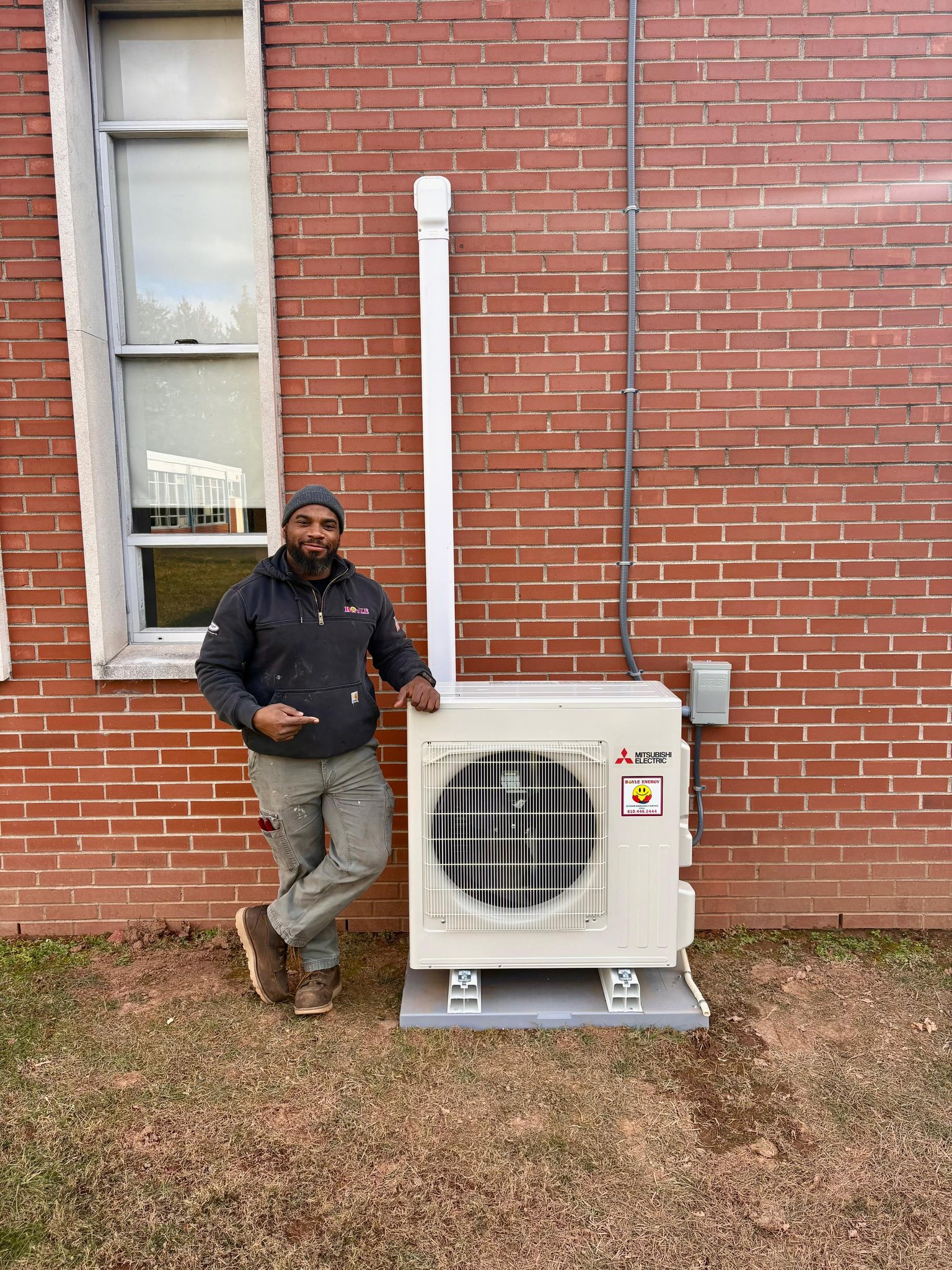
Choosing the right size AC unit for your home in Chester County or Delaware County, PA means going beyond square footage. An oversized air conditioner short-cycles, fails to control humidity, and raises energy bills, while an undersized one runs nonstop and wears out prematurely. The only accurate way to find the right size AC unit for your specific home is a Manual J load calculation, which accounts for insulation, ceiling height, window orientation, local climate, and more. Homeowners who skip this step typically pay more over time, through higher utility bills, more frequent repairs, and shorter system lifespans.
The “Bigger Is Better” Trap That Costs Homeowners Every Month
Walk into almost any conversation about AC in the Philadelphia suburbs, and you’ll hear someone say their contractor just “matched the old unit” or went by square footage. It seems logical. But here’s the problem with that thinking: it assumes the previous system was sized correctly in the first place, and most weren’t. Whether you’re in Havertown, West Chester, Newtown Square, or anywhere across Chester County, this is one of the most common and costly mistakes homeowners make when pursuing air conditioning installation in Delaware County.
AC capacity is measured in tons, where one ton equals 12,000 BTUs of heat removed per hour. A rough rule of thumb suggests one ton per 400-500 square feet, and while that gives a ballpark, it leaves out factors that can dramatically swing what your home actually needs. Ceiling height, insulation levels, window type and orientation, number of occupants, sun exposure, duct layout, and local design temperatures all change the equation. Two homes on the same street in Wayne or Media with nearly identical square footage can have legitimately different sizing requirements.
What a Proper Sizing Process Actually Looks Like
The industry standard for determining correct AC size is the Manual J Residential Load Calculation, a method developed by the Air Conditioning Contractors of America (ACCA) and recognized as a national ANSI standard. Pennsylvania building departments frequently require Manual J documentation before issuing HVAC permits. A proper Manual J accounts for your home’s exact insulation R-values, window types, and which direction they face, ceiling heights per room, local climate design temperatures (Chester County falls in IECC Climate Zone 5A with summer design temperatures reaching up to 91°F), and air infiltration rates, among other factors.
South-facing single-pane windows, for example, can add up to 50% more cooling load compared to north-facing, low-E double-pane windows. A room with 10-foot ceilings requires roughly 25% more capacity than the same square footage with 8-foot ceilings. These are the kinds of details that a rule-of-thumb calculation never touches. When a contractor performs a genuine Manual J and follows it with the right equipment selection (called Manual S) and proper duct design (Manual D), you end up with a system that actually fits your home. When they skip it, you end up with one of two common problems.

The Oversized AC: When Bigger Actually Hurts
An oversized air conditioner sounds appealing. More power, faster cooling, done. But that’s not how it plays out. An oversized unit hits the thermostat setpoint quickly, sometimes in just two or three minutes on a hot day, then shuts off before completing a full cooling cycle. This pattern is called short cycling, and it’s the root cause of several expensive problems at once.
Every time an AC starts up, it draws a significant electricity spike. A system that starts and stops dozens of times per day uses more energy than a properly sized unit running longer, steady cycles. Your electric bill climbs, but your comfort doesn’t improve. Humidity is the other issue, and in the Philadelphia area’s muggy summers, it’s a big one. Dehumidification happens gradually as the system runs and moisture condenses on the evaporator coil and drains away. An oversized unit shuts off before that process finishes, leaving your home feeling cool but clammy. Indoor humidity can stay above 50%, the threshold above which mold and mildew begin to thrive. You might be running your AC constantly and still feel sticky.
Short cycling also puts mechanical stress on the compressor and blower motor every single time the unit starts. Instead of running smooth, long cycles as designed, components are forced through constant high-stress startups. Over time, this accelerates wear and can cut years off a system’s expected 15-to-20-year service life. Uneven temperatures across rooms, excessive noise from too much airflow forced through undersized ductwork, and a home that never quite feels comfortable are common complaints that often trace back to an oversized unit.
If you’ve noticed your system shutting off after just a few minutes, your home feeling humid even when the AC is running, or hot spots on upper floors despite the system running frequently, it may be time to have your system properly evaluated. The team at Boyle Energy has been assessing and installing HVAC systems across Chester County, Delaware County, and the Philadelphia suburbs for nearly 90 years. You can reach them at 610-446-2444 to schedule a free estimate and find out whether your current system is sized right for your home.
The Undersized AC: When Your System Never Catches Up
On the opposite end, an undersized system runs constantly, especially during August heat waves in Chester County, without ever reaching the temperature you’ve set. The compressor stays on, the bills keep rising, and the system wears down faster from continuous overwork. On a design-day temperature in the mid-to-upper 80s with high humidity, an undersized unit simply cannot remove enough heat to keep up with what’s coming in through walls, windows, and the roof.
Homeowners with undersized systems often describe the experience as “the AC runs all day and the house never cools down.” That’s a sign the system doesn’t have enough capacity for the home’s actual cooling load. What makes this particularly frustrating is that the same system might seem to work fine in spring and fall, when the outdoor load is lighter. The shortfall only reveals itself when conditions get genuinely demanding, which is exactly when you need it most.
Knowing how to find the right size AC unit means understanding that too small is not a safe or economical choice either. A continuously running undersized system will typically fail sooner, need more repairs, and deliver higher monthly bills than a correctly sized system that runs proper cycles.
Why Chester County and Delaware County Homes Have Unique Sizing Challenges
The housing stock across much of Delaware County, Chester County, and the Philadelphia suburbs is older. A large portion of homes were built before 1980, and industry data suggests that only about 20% of those homes have insulation levels that meet current standards. Older colonials, twins, and rowhomes in communities like Havertown, Springfield, Broomall, and Malvern often have variable ceiling heights across floors, limited original insulation in walls, and windows that have been updated at different times. All of these characteristics change the actual cooling load significantly.
This matters because a home that has had its windows upgraded, attic insulation blown in, or an addition built may actually need less cooling tonnage than when the original system was installed. If a contractor just replaces like-for-like without revisiting the load calculation, the new system may be just as oversized as the old one, and the homeowner will experience the same comfort and efficiency problems on a new, expensive piece of equipment. Heating and air conditioning repair calls that trace back to chronic short cycling or a system running non-stop are often symptoms of this exact issue.
What Good Sizing Actually Delivers
When choosing the right size AC unit comes down to a real Manual J calculation done by a knowledgeable contractor, the results are straightforward. The system runs consistent cycles, typically 15 to 20 minutes, two to three times per hour. Indoor humidity stays in a healthy 30-to-50% range. Temperatures are even across rooms. The compressor and blower run smoothly without constant stop-start stress. Energy bills reflect actual usage, not waste. And the system lasts the full expected service life.
It’s also worth knowing that any significant change to your home should prompt a fresh look at sizing. Finishing a basement, adding a room, air sealing and insulating, or replacing windows can all shift the thermal load enough to change what size system your home actually needs. Proper sizing is not a one-time answer that holds forever. It’s tied to the specific characteristics of your home as it exists today.
According to the U.S. Department of Energy, proper sizing and installation of central air conditioning can reduce energy use and improve comfort significantly compared to incorrectly sized systems.
How to Tell If Your AC May Be the Wrong Size Right Now
You don’t always need a new system to identify a sizing problem. Here are four signs worth paying attention to:
- Your AC shuts off after just a few minutes, especially on hot days, then starts up again shortly after.
- Your home feels sticky or muggy even though the temperature is where you’ve set it.
- You have persistent hot or cold spots that don’t resolve with normal airflow adjustments.
- Your energy bills have been consistently higher than neighbors with similar-sized homes and usage patterns.
Any of these alone doesn’t guarantee a sizing problem, but if more than one applies, it’s worth having a professional look at your system and your home’s actual load requirements rather than waiting for a failure.
Getting Sizing Right Before You Invest in a New System
Whether you’re replacing an aging system or doing a full air conditioning installation in Havertown homes that never had central air, the sizing conversation should come before the equipment conversation. The unit brand, efficiency rating, and features all matter, but none of them overcome the fundamental problem of installing the wrong size for your home’s actual needs.
Asking a contractor how they plan to size your system is a reasonable question. A contractor who responds with “we’ll match what you have” or gives you a number based purely on square footage without asking anything else about your home is cutting corners that will ultimately cost you. A contractor who mentions performing a load calculation and asks about your insulation, windows, and home layout is approaching the job the right way.
If you’re planning a system replacement or want to know whether your current AC is actually the right fit for your home, Boyle Energy is happy to help. Their team serves Chester County, Delaware County, Montgomery County, and the greater Philadelphia area. Call us at 610-446-2444 to schedule an evaluation.
FAQs
- What size AC do I need for a 2,000 square foot home?
Square footage alone doesn’t determine AC size. A 2,000 sq ft home in Chester County could need anywhere from 2.5 to 4 tons depending on ceiling height, insulation quality, window type and orientation, and local climate conditions. A proper Manual J load calculation is the only reliable way to determine the correct size for your specific home. - What happens if my AC is too big for my house?
An oversized AC short-cycles, meaning it cools your home too quickly and shuts off before completing a full cycle. This causes your home to feel cool but humid, creates hot and cold spots, raises energy bills from frequent startups, and accelerates wear on the compressor and motor, which shortens the system’s lifespan. - Why does my AC run all the time but the house still feels hot?
If your AC runs continuously without reaching your set temperature on a hot day, the system may be undersized for your home’s actual cooling load. Other causes include low refrigerant, dirty coils, or duct leaks. An HVAC technician can diagnose which issue is responsible. - How is AC size calculated for a house?
AC size is calculated using a Manual J Residential Load Calculation, the ANSI-approved national standard developed by the Air Conditioning Contractors of America. It accounts for square footage, ceiling heights, insulation levels, window type and direction, number of occupants, local design temperatures, and other factors specific to your home. - Can I replace my AC with the same size as the old one?
Only if the previous system was correctly sized, which many are not. If your old system short-cycled, left your home humid, or ran constantly in peak heat, replacing it with the same tonnage repeats the same problem. You should also recalculate sizing if you’ve added insulation, upgraded windows, or made structural changes since the original installation. - Is a 3-ton AC unit right for my home?
It depends entirely on your home’s specific characteristics. A 3-ton unit (36,000 BTUs) is not automatically right or wrong for any home. What matters is whether that capacity matches your home’s actual cooling load as determined by a proper Manual J calculation considering your insulation, layout, ceiling heights, windows, and local climate. - Why is my house so humid even with the AC on?
High indoor humidity while the AC is running is often a sign of an oversized unit that short-cycles. Because the system shuts off too quickly, it doesn’t run long enough to remove moisture from the air through the condensation process. A properly sized system that runs full cooling cycles will dehumidify your home much more effectively. - How often should AC size be recalculated?
You should revisit HVAC sizing whenever you make significant changes to your home. This includes adding or finishing living space, upgrading windows, improving insulation or air sealing, building an addition, or replacing major components of your HVAC system. Even without renovations, sizing should be professionally confirmed any time you replace a system rather than assumed from the prior unit.

Patrick Boyle brings over three decades of expertise to Boyle Energy, carrying forward a family legacy that began with his grandfather, Joseph Boyle Sr., the company’s founder. With extensive technical proficiency, Patrick holds advanced certifications in both oil and HVAC systems, ensuring the highest standards of service and performance. Additionally, he is recognized as an NPGA-certified propane service professional, underscoring his commitment to safety and industry best practices. Under his leadership, Boyle Energy continues to deliver reliable and efficient energy solutions, grounded in generations of trust and innovation.
