 Skip to content
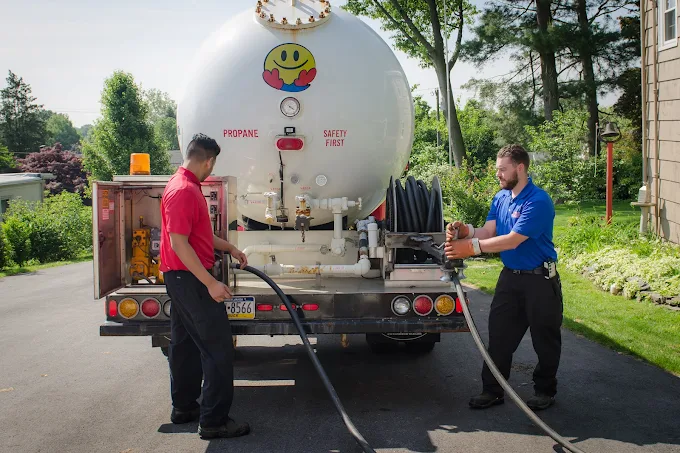
Automatic propane delivery uses degree day monitoring to track temperature changes and predict when your tank needs refilling, typically scheduling delivery before you drop below 20-30% capacity. This eliminates the need to manually check your gauge in all weather conditions and prevents costly emergency delivery fees that can run $150-$300 when you run out unexpectedly. Customers also benefit from pre-season price locks, optimized delivery routes that lower per-gallon costs, and budget billing options that spread expenses across equal monthly payments instead of unpredictable winter spikes.
Stop Playing the Guessing Game with Your Propane Tank
Let me ask you something. When was the last time you went outside in freezing weather to squint at your propane tank gauge? If you’re like most homeowners in Havertown, it’s probably been a while. And that’s exactly how people end up with no heat on the coldest night of January.
Manual propane monitoring puts all the responsibility on you. You need to remember to check the tank, interpret the gauge correctly, call for delivery with enough lead time, and hope the weather doesn’t turn before your scheduled fill-up arrives. Miss any step in that chain, and you’re facing a very uncomfortable situation.
Here’s what most people don’t realize until it happens to them. Running out of propane isn’t just inconvenient. It’s expensive. Emergency delivery fees start around $150 and can climb past $300 depending on the day and time. Then there’s the required safety inspection before they’ll turn your system back on, plus the service call to relight your furnace and water heater. What could have been a routine $2 per gallon fill-up suddenly costs you an extra $400 or more.
Automatic propane gas delivery solves this entire problem by taking the monitoring responsibility off your plate completely.
How Automatic Delivery Actually Works
The system is smarter than you might think. Your propane supplier tracks something called heating degree days, which measure how cold it’s been in your area over time. They know your tank size, your typical usage patterns, and how quickly you go through fuel based on outdoor temperatures.
When the calculation shows you’ll hit about 20-30% capacity within the next week or so, they automatically schedule a delivery. No phone call needed. No gauge checking required. The truck just shows up before you run low.
Many companies now include wireless monitoring technology that sends real-time fuel levels directly from your tank to their dispatch system. It’s like having someone watch your propane supply 24/7 so you don’t have to think about it.
The beauty of this approach is consistency. Delaware County and Chester County see between 4,500 and 5,000 heating degree days each year. That’s a lot of cold weather, and it creates predictable patterns in propane consumption. Automatic delivery systems use this data to keep you continuously supplied without any effort on your end.
If you’re tired of worrying about your fuel levels, Boyle Energy offers automatic delivery service throughout Havertown, Wayne, and West Grove. Give us a call at +1610-897-7580 to set up your account and stop stressing about propane monitoring.
The Money You’re Leaving on the Table
Price fluctuations hit propane users hard every winter. From November through March, Pennsylvania heating season drives prices up by 15-25% on average compared to summer rates. When you’re calling for delivery only when your tank runs low, you’re almost guaranteed to be buying during peak price periods.
Automatic delivery customers get access to something that will-call customers don’t: pre-season price locks and budget plans. Before winter hits, you can lock in your rate for the entire season. While your neighbors are paying premium prices during January cold snaps, you’re still paying your locked-in September rate.
Budget billing takes this a step further by spreading your annual propane costs across 10-12 equal monthly payments. Instead of getting hit with a $900 bill in February and a $600 bill in December, you pay the same manageable amount every month. It’s not about paying less total, it’s about making your household cash flow predictable and eliminating those budget-crushing winter spikes.
There’s another cost factor most people overlook. Modern delivery routing systems use GPS technology and computerized scheduling to optimize driver routes. When propane gas companies in Philadelphia can plan deliveries rather than responding to individual emergency calls, they spend less on fuel, labor, and vehicle wear. Those operational savings often get passed along to automatic delivery customers through lower per-gallon rates.
The average Havertown household using propane for heating goes through 800-1,200 gallons per year depending on home size and insulation quality. Even a $0.10 per gallon discount for automatic delivery customers translates to $80-$120 in annual savings, and the real discount is often higher than that.
Why Your Tank Should Never Drop Below 20%
This matters more than most homeowners realize. Propane tanks need to maintain at least 20% fuel to ensure proper vapor pressure for your appliances. For a standard 500-gallon tank, that means never going below 100 gallons.
Drop below that threshold and you risk more than just running out. Your furnace might start running inefficiently. Your water heater could fail to maintain consistent temperature. If you have a propane generator as backup power, it might not start when you need it most.
Worse still, letting your tank run too low can introduce air into your fuel lines. Once that happens, you need a service technician to come purge the system and restart everything properly. That’s another service call you’re paying for, on top of the inconvenience of being without heat, hot water, or cooking capability.
Automatic delivery keeps you consistently above that 20% minimum. The system schedules your fill-up to arrive before you approach the danger zone, maintaining optimal pressure and performance across all your propane appliances.

Perfect for Havertown’s Mix of Properties
The areas Boyle Energy serves include an interesting variety of homes. Havertown and Wayne have plenty of older properties built before natural gas lines reached every neighborhood. West Grove includes newer rural homes where propane is simply the most practical fuel option.
What these properties have in common is distance from natural gas infrastructure. For these homes, propane isn’t a choice, it’s a necessity. And when you’re relying on propane for home heating, hot water, cooking, and possibly backup power, running out isn’t an option you can afford to risk.
Automatic delivery makes particular sense for certain homeowner situations. If you’re managing a vacation property that sits empty for weeks at a time, you can’t exactly check the tank regularly. Elderly homeowners shouldn’t have to navigate icy walkways to read a gauge in the dark. Busy families with kids, jobs, and a million other responsibilities will inevitably forget to monitor fuel levels during hectic periods.
The service essentially eliminates the cognitive load. You don’t need to remember, plan, or worry. The propane just shows up when you need it.
Delivery Reliability When It Matters Most
Here’s a scenario that plays out every winter across Pennsylvania. A major cold front moves in. Everyone’s furnace starts running overtime. Suddenly, hundreds of households realize their tanks are lower than they thought. They all call for delivery at the same time.
Will-call customers go into a queue. During peak season, you might wait 3-5 business days for a delivery. Automatic delivery customers get priority scheduling, typically within 1-2 business days, because the company already anticipated the increased demand and planned accordingly.
Established propane dealers in Chester County maintain 24/7 emergency service, but that doesn’t mean you want to use it. Emergency calls cost significantly more than scheduled deliveries. Automatic delivery customers rarely need emergency service because the monitoring system prevents those crisis situations in the first place.
There’s also the equipment reliability factor to consider. Propane furnaces, water heaters, and other appliances perform best with consistent fuel supply. Letting your tank run low repeatedly, then filling it back up, then letting it run low again creates more stress on your system than maintaining a steady supply level. Over years of use, that difference can affect equipment lifespan and repair frequency.
Making the Switch Is Simpler Than You Think
Most homeowners assume automatic delivery requires some complicated setup process or expensive monitoring equipment. The reality is much simpler.
You contact your propane supplier, provide some basic information about your home size and typical usage, and they handle the rest. Many companies provide the wireless monitoring equipment free as part of the automatic delivery service. Installation takes minutes.
From that point forward, you’re simply enrolled in the program. You’ll receive notification before each scheduled delivery, usually by phone, email, or text depending on your preference. The delivery happens. You get a receipt. Done.
If you’re currently using propane in Delaware County for your heating needs, switching to automatic delivery doesn’t mean changing suppliers unless you want to. Most established companies offer both will-call and automatic delivery options. You’re just changing how your account is managed, not who provides your fuel.
For homeowners in Havertown, Wayne, and West Grove looking to simplify their propane service, Boyle Energy makes the transition straightforward. Reach out to them at +1610-897-7580 to discuss automatic delivery options and find out what programs fit your household’s needs and budget.
Frequently Asked Questions
- How does automatic propane delivery work?
Automatic delivery uses degree day monitoring, which tracks outdoor temperatures in your area to predict your fuel consumption rate. Based on your tank size and usage patterns, the system calculates when you’ll reach about 20-30% capacity and schedules a delivery before you run low. Many providers also use wireless tank monitors that send real-time fuel levels directly to their dispatch system, eliminating guesswork entirely. - What happens if I’m not home when the delivery truck arrives?
Propane delivery doesn’t require you to be home. Drivers access your tank, fill it to the appropriate level, check for any visible issues, and leave a delivery receipt. Most companies will notify you by text, email, or phone after the delivery is complete. As long as your tank is accessible and there are no obstructions, the delivery happens whether you’re home or not. - Can I still get emergency delivery if I’m on automatic delivery?
Yes, automatic delivery customers can request additional fills if needed, though this rarely happens since the monitoring system prevents low tank situations. If you’re planning extended guests during holidays or making other changes that increase usage, just notify your supplier and they’ll adjust your delivery schedule accordingly. Emergency service remains available 24/7 for all customers. - Is automatic delivery more expensive than calling when I need propane?
Automatic delivery typically costs less overall. You avoid emergency delivery fees ($150-$300), access pre-season price locks that protect against winter price spikes, and often receive lower per-gallon rates due to optimized routing efficiency. Budget billing options also spread costs across equal monthly payments instead of unpredictable large bills during heating season. - What if I use less propane than the system predicts?
The system adjusts based on your actual consumption patterns over time. If you’re using less fuel than initially estimated, the degree day monitoring recalibrates and extends the time between deliveries. Modern wireless monitors provide precise real-time data, so the predictions become increasingly accurate as the system learns your household’s specific usage patterns. - Do I need to sign a long-term contract for automatic delivery?
Contract requirements vary by supplier. Some companies offer automatic delivery with no long-term commitment, while others may request a one or two-year agreement, particularly if they’re providing free tank installation or monitoring equipment. Ask about contract terms when setting up your account to understand the specific requirements and cancellation policies. - Will automatic delivery work for my second home or vacation property?
Absolutely. Automatic delivery is actually ideal for vacation properties since you can’t monitor the tank when you’re not there. The system tracks usage whether the home is occupied or empty, ensuring you always have fuel for your next visit. Many vacation homeowners use automatic delivery specifically to avoid arriving at a cold house with an empty propane tank. - How much propane will I use in a typical winter?
Usage varies significantly based on home size, insulation quality, thermostat settings, and what appliances run on propane. The average Havertown area home using propane for heating, hot water, and cooking consumes 800-1,200 gallons annually, with the majority used during the November through March heating season. Your supplier can estimate your specific needs based on your home’s square footage and the appliances you’re fueling.

Patrick Boyle brings over three decades of expertise to Boyle Energy, carrying forward a family legacy that began with his grandfather, Joseph Boyle Sr., the company’s founder. With extensive technical proficiency, Patrick holds advanced certifications in both oil and HVAC systems, ensuring the highest standards of service and performance. Additionally, he is recognized as an NPGA-certified propane service professional, underscoring his commitment to safety and industry best practices. Under his leadership, Boyle Energy continues to deliver reliable and efficient energy solutions, grounded in generations of trust and innovation.
