
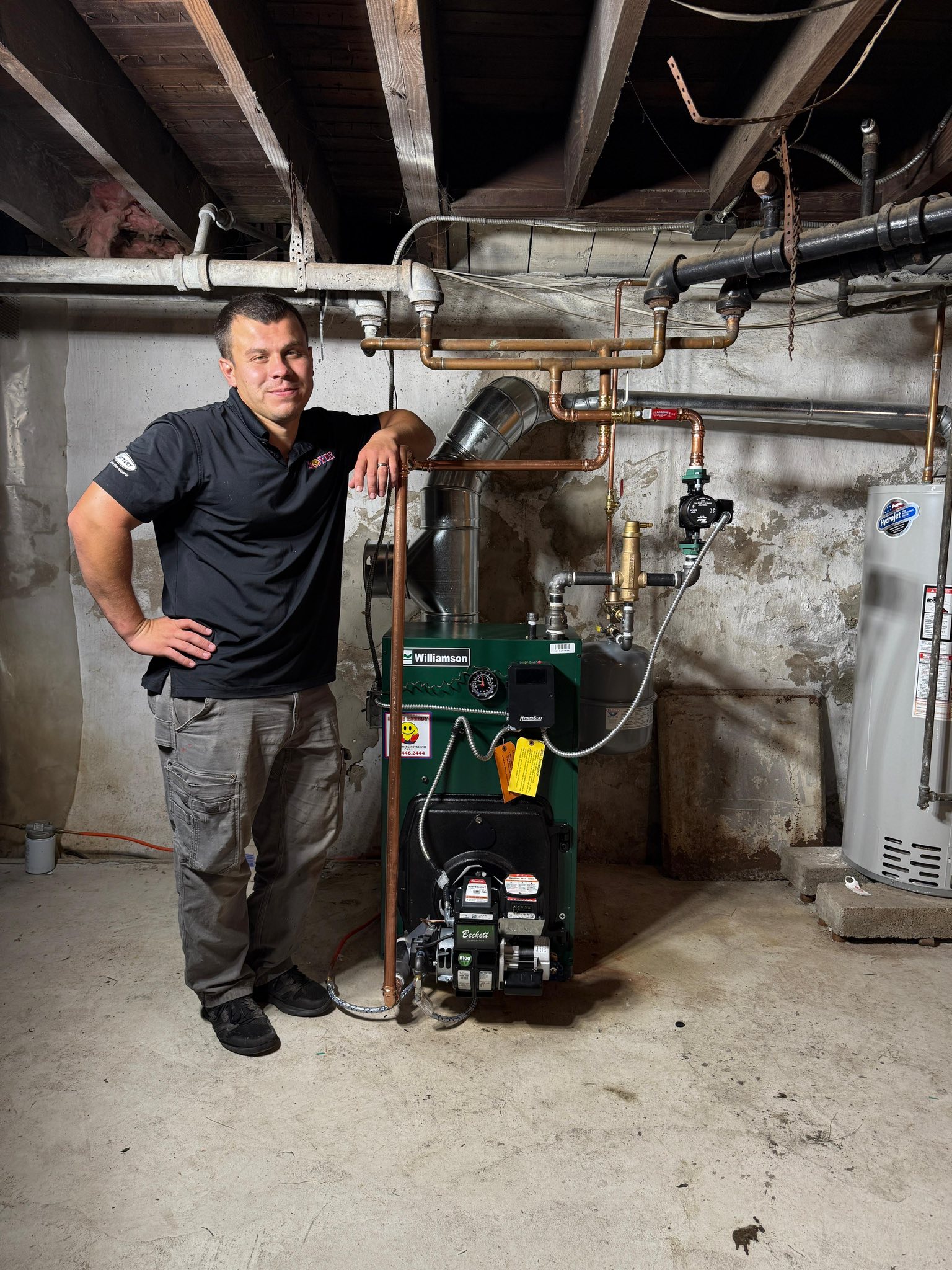
When the cold weather of winter sets in around Havertown, it’s a good idea to turn on your furnace and let it warm up your home. If you heat with oil, you have another worry to consider: that the oil will freeze or gel. In fact, frozen heating oil can cause your furnace to conk out when you need it most, such as during a cold snap. Fortunately, there are some common-sense measures you can take to avoid it.
Why Heating Oil Freezes and When It Happens
Heating oil doesn’t turn into a solid block of ice like water, but it does “gel” or thicken to a sludge in extremely cold weather – usually around 20°F. That gelling thickens the oil, slowing its flow and clogging filters and lines. Once temperatures drop below 15°F, the risk becomes even greater
In Havertown and the surrounding region, overnight lows in January and February dip into the teens. Houses with outdoor tanks or long, exposed oil lines are particularly susceptible
1. Opt for a Blended Heating Oil
One of the best techniques to achieve a lower gelling point in heating oil is to blend it with kerosene. Kerosene dilutes the oil to help get it flowing in cold temperatures. This is a common practice in the Northeast, and particularly useful for tanks outside.
Not all heating oil companies offer this as standard, so it’s wise to inquire when you schedule a delivery. We can help you determine if a kerosene mix would make sense for your system at Boyle Energy, depending on the location of your tank and how you generally use it.
2. Try Anti-Gel Additives
Anti-gel additives are chemical treatments that naturally stave off thickening in cold temperatures. The latter is generally added near the time of delivery, but if you’re doing it yourself and are topping off your tank, you can buy them and add them yourself. They do so by changing the shape of wax crystals in oil, which helps them resist clumping and clogging the system.
3. Insulate Your Tank and Fuel Lines
If you use an outdoor oil tank to heat your home, it is exposed directly to cold air and wind chill. A few will also insulate the tank (with special covers or wraps) to help save you energy. Similarly, older houses in Delaware County sometimes have fuel lines in the basement or above-ground that are not insulated. If those are, trim, insulate and/or redirect to minimize heat dissipation.

4. Keep Your Tank Full
A full tank can help in two ways. For one, it eliminates air space on the inside, which will result in less formation of condensation and water droplets that can freeze. Second, the worst that happens is you have some extra fuel to work with if there’s a delivery delay due to snow or ice.
If you always find yourself in a panic during a cold snap about whether you have enough heat to make it through, Boyle Energy offers reliable automatic heating oil delivery for homes in Havertown, Wayne, and West Grove, helping you stay ahead of winter weather without having to constantly check your tank. Reach out to Boyle Energy at 610-347-5197 for automatic or will-call oil deliveries.
5. Schedule Preventive Maintenance
This is something that can get neglected, but it’s very important. A clean system works better in all conditions. Dirty filters, sludge formation, or partially blocked nozzles can greatly exacerbate the problem of gelling. Before winter arrives, get a technician to check the entire fuel system, particularly if you’ve had freeze-ups in the past.
Not sure where to even start? Boyle Energy offers comprehensive seasonal tune-ups & service plans that include filter checks, line inspections, and winterization advice tailored to your home.
6. Know the Warning Signs
You might not realize gelling is taking place until your heat stops working. Other indications are strange noises coming from the burner, lower home temperatures , and/or uneven heating. If you think the oil might have begun to gel, resetting your system over and over won’t help. That might make it worse. Put it off and call a repairman.
7. What to Do If Heating Oil Freezes
When heating oil freezes or gels, a professional needs to warm and recondition the oil, replace any clogged filters, and potentially bleed the lines to get everything flowing again. This process can take hours and may require temporary heating alternatives, so prevention is definitely easier (and cheaper) than repair.
The best and most productive thing Havertown homeowners can do for the older houses nearby, especially those with outdoor tanks that are battered by rain, snow and ice every winter, is to talk about it with local oil companies in Delaware County who know there’s a risk and offer custom solutions.
Stay Ahead of the Freeze
Even if your heating system is cranking, it’s worth taking stock of your setup before the next deep freeze. Winters in southeastern Pennsylvania can turn bitter seemingly overnight, and a frozen tank or fuel line can go from being an inconvenience to dangerous.
Want expert help winterizing your heating oil system? Reach out to Boyle Energy at 610-347-5197 and speak with a local technician who knows exactly what your home needs.
FAQs
- At what temperature does heating oil freeze?
Heating oil starts to gel at about 20 degrees, and becomes more viscous with plummeting temperatures. It’s not an absolute freeze, but more of a thickening that won’t flow through lines. - How do I keep my heating oil from freezing?
Use anti-gel additives, keep your tank full, insulate outdoor tanks and lines, and consider using a kerosene blend in winter. - Can I add anti-gel treatment to my oil tank myself?
Yes, many treatments are straightforward to use and can be poured into the tank. Be sure to follow the instructions on the product label. - What happens if my heating oil freezes?
Your heater will cycle in on and off for a few seconds. Technicians will have to thaw and treat the fuel, change filters and bleed lines to get heat moving again. - Is kerosene better than heating oil in winter?
Kerosene also has a lower freezing point compared to heating oil, it is more often used as a component of home heating fuel in cold regions where handling and transporting pure heating oil is problematic with an outdoor storage tank. - Why does my furnace stop working only on really cold nights?
That is frequently an indicator of oil gelling in cold temperatures. See if your tank is outside or the system doesn’t have additives. - Do all oil companies treat heating oil for winter?
No, not all do. It’s best to ask your supplier whether they add anti-gel treatments or offer kerosene blends for cold-weather deliveries. - How can I tell if heating oil is starting to gel?
Watch for poor heating performance, strange noises coming from the burner or the furnace turning off suddenly, particularly during times of very cold weather.

Patrick Boyle brings over three decades of expertise to Boyle Energy, carrying forward a family legacy that began with his grandfather, Joseph Boyle Sr., the company’s founder. With extensive technical proficiency, Patrick holds advanced certifications in both oil and HVAC systems, ensuring the highest standards of service and performance. Additionally, he is recognized as an NPGA-certified propane service professional, underscoring his commitment to safety and industry best practices. Under his leadership, Boyle Energy continues to deliver reliable and efficient energy solutions, grounded in generations of trust and innovation.
